


Orders
.png&w=48&q=75 "login")
Profile


Wallet

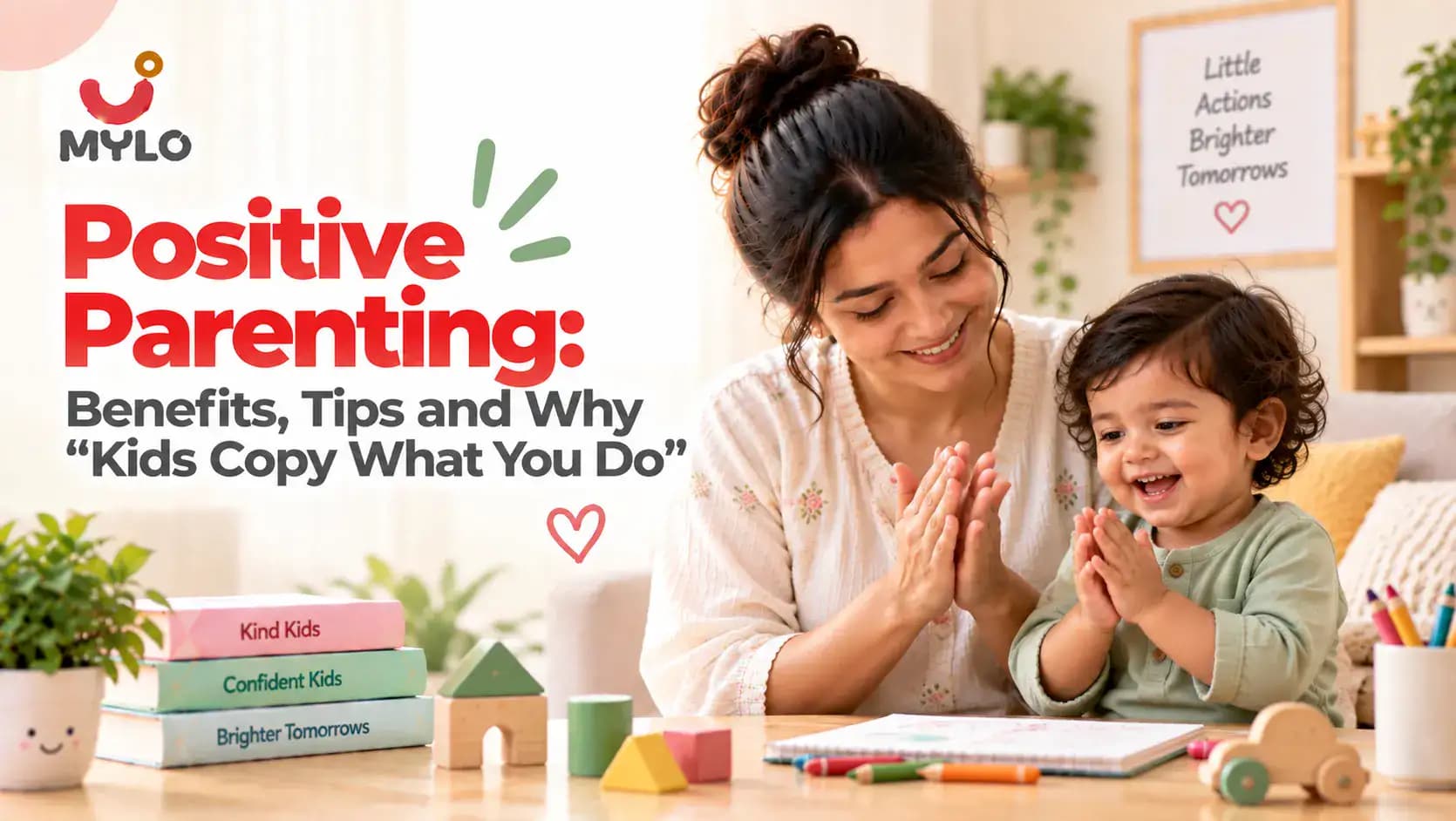
Positive Parenting: Benefits, Tips and Why "Kids Copy What You Do" (2026 Guide for Indian Parents)


RMNCH+A, MCH & Midwifery, Program Management & National Trainer (ToT/ToN), WHO, MoHFW, ECHO Model · 11 years experience
 293 Likes|
 17 min
TL;DR
Positive parenting means guiding children with warmth, clear limits and teaching, instead of fear, shouting or punishment. It builds a strong bond, better communication, higher self-esteem and fewer behaviour problems over time. One of its biggest lessons is simple: kids copy what you do, not what you say. Toddlers learn how to use phones, handle anger and talk to others mainly by watching the adults around them. If you want your child to put the phone down, stay calm and speak kindly, the most powerful tool is to show them first. Nobody gets it right all the time. When you slip, repair by saying sorry and trying again, which teaches your child a valuable lesson too.
Key Takeaways
Positive parenting is kind and firm. It isn't permissive or "no rules".
It strengthens the parent-child bond and reduces negative behaviour over time
Children learn more from what you do than from what you tell them
Parents' phone use around children can reduce responsive, back-and-forth interaction (ZERO TO THREE)
Children learn to handle anger by watching how their parents handle it (APA)
The words and tone you use at home become your child's words and tone
Saying sorry after you lose your temper teaches repair and responsibility
A family media plan helps everyone, including parents, build healthy screen habits (AAP)
What Is Positive Parenting?
Positive parenting focuses on teaching good behaviour rather than only punishing bad behaviour. It combines:
Warmth and connection: love, attention and listening
Clear, consistent limits: rules that are explained and followed through
Teaching instead of punishing: showing children what to do
Respect: treating children as people with real feelings
Encouragement: noticing effort and good choices
Positive Parenting vs Other Styles
Style | What It Looks Like | Common Outcome |
|---|---|---|
Positive (authoritative) | Warm, with clear limits and explanations | Confident, cooperative children with good self-control |
Strict (authoritarian) | Rules through fear, shouting or smacking; "Because I said so" | Children may obey out of fear, hide mistakes or become anxious or aggressive |
Permissive | Lots of love but few limits; gives in to avoid tears | Children may struggle with self-control and rules |
Uninvolved | Little warmth or guidance | Children may feel insecure and struggle emotionally |
Benefits of Positive Parenting
1. Stronger Parent-Child Relationship
Positive interactions build trust. Children feel safe coming to you with problems, now and in their teenage years. Harsh parenting has been linked with mental health difficulties in children and later in life.
2. Better Communication
When children know they won't be shouted at, they talk more openly about their feelings and mistakes. Listening and making space for their emotions is a strong foundation for good behaviour.
3. Higher Self-Esteem and Happiness
Trust and encouragement help children feel capable. They learn to see mistakes as chances to grow, not as failures to hide.
4. Fewer Behaviour Problems Over Time
Instead of daily power struggles, positive parenting sets boundaries and teaches alternatives. Over time, this reduces tantrums, defiance and conflict.
5. Better Emotional Control
Children who are calmly guided through big feelings slowly learn to manage their own emotions, a skill linked to better friendships and school success.
6. Less Stress for Parents
Fewer battles and a closer relationship make everyday parenting calmer for the whole family.
Kids Copy What You Do: The Power of Role-Modelling
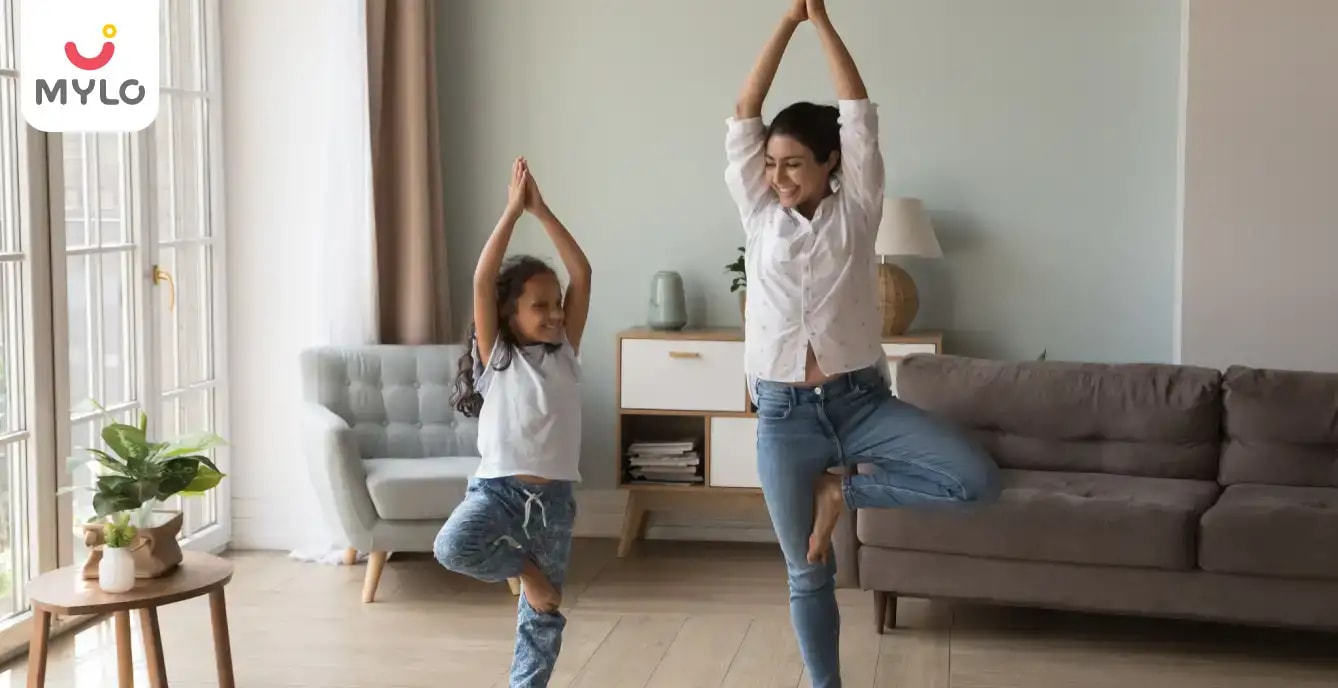
Toddlers are natural copycats. From around their first birthday, they start copying how you talk, move, eat and react. By 2 to 3 years, they copy how you handle feelings, screens and people. Research shows children learn emotion regulation strategies by watching their parents. The same goes for phone habits, words and manners.
In short: your child is always watching. This isn't a reason to feel guilty. It's one of the most powerful tools you have.
Role-Modelling Screen Time
What Your Child Learns From Your Phone Use
When parents are often on their phones during meals, play or conversations, children may:
Feel ignored and act out to get attention
Learn that phones are more important than people
Want more screen time themselves
Get fewer chances to talk, which matters for language development
Researchers call this "technoference", when technology interrupts time between parents and children. ZERO TO THREE notes that parents' phone use can reduce the quality and quantity of parent-child interaction. A study on parental distraction found that when parents use screens around their child, they respond less to what the child is doing. According to the AAP, children learn media habits the same way they learn language and relationships: by watching the adults around them.
How to Model Healthy Screen Habits
Instead of This | Try This |
|---|---|
Scrolling during meals | Phone-free meals for the whole family |
Checking the phone while your child talks to you | Put it face down and make eye contact |
TV on in the background all day | Switch it off when no one is watching |
Using your phone in bed at night | Charge phones outside the bedroom |
Saying "No phone for you" while you use yours | Follow the same rules you set for them |
Silent scrolling | Narrate your use: "I'm checking the map for our trip." |
Simple Family Screen Rules
Phone-free zones: dining table, bedrooms and the car for short trips
Phone-free times: meals, the first 10 minutes after coming home, and bedtime
A family media plan: The AAP's Family Media Plan helps families set rules that everyone follows, including parents
Screens for toddlers: The AAP advises no screens under 18 months (except video calls), and about 1 hour a day of good-quality content for ages 2 to 5, watched together when possible
For more on screens at mealtimes, read our guide on picky eating and screen feeding. For connection ideas, see our 15-minute rituals for working parents.
Role-Modelling Anger and Big Feelings
Every parent gets angry. What matters is what your child sees you do with that anger. If they see shouting, slamming doors or hitting, they learn that's how to handle frustration. If they see you pause, breathe and speak calmly, they learn that too.
According to the American Psychological Association, children learn to manage emotions by watching how their parents manage theirs.
The "Pause, Name, Calm, Repair" Method
Pause: Stop before you react. Take a step back if your child is safe.
Name it out loud: "I'm feeling really frustrated right now." This teaches your child that feelings have names.
Calm down, visibly: "I'm going to take 3 deep breaths." Let your child see you do it.
Respond calmly: Use a firm but steady voice to set the limit.
Repair if you slipped: "I'm sorry I shouted. I was angry, but shouting wasn't okay. Next time I'll take a breath first."
Why Repair Matters
Nobody is calm 100% of the time. When you apologise after losing your temper, your child learns that:
Everyone makes mistakes
Relationships can recover after conflict
Saying sorry is a strength, not a weakness
They are still loved, even after a hard moment
Handling Anger Between Adults
Children are deeply affected by how parents and family members treat each other.
Avoid shouting matches or insults in front of children
If an argument happens, let your child see you make up too
Never use children as messengers or ask them to take sides
If your toddler is hitting or biting when angry, read our guide on hitting, biting and bad language in toddlers.
Role-Modelling Language and Tone
Your child's first words, favourite phrases and tone of voice all come from home. They also pick up the words you use when you're angry, in traffic or on the phone.
What Children Copy
Bad words and gaalis, even when said quietly or "just once"
Tone of voice: shouting, sarcasm or a harsh tone
How you talk about others: relatives, neighbours, house help, other drivers
Labels: "You're so naughty" or "She's the lazy one" become how children see themselves
Manners: "please", "thank you", "sorry" and greeting elders
Comparisons: "Why can't you be like your cousin?"
How to Model Kind, Respectful Language
Instead of This | Try This |
|---|---|
"Stop crying or I'll give you a reason to cry!" | "I can see you're upset. I'm here." |
"You're so naughty!" | "Hitting is not okay. Let's find another way." |
"Shut up!" | "I need a quiet moment, please." |
Swearing in traffic | "Uff! That driver made me frustrated." |
"You never listen!" | "I need you to listen. Let's try again." |
Speaking rudely to house help or delivery staff | Say "please" and "thank you" to everyone |
"Why can't you be like your brother?" | "I love the way you tried your best." |
Say Please, Thank You and Sorry to Your Child
The best way to teach manners is to use them with your child: "Please pass me the cup", "Thank you for helping" and "Sorry, I bumped into you."
Other Things Children Copy
Area | What to Model |
|---|---|
Eating | Eating fruits and vegetables, sitting together at meals, no screens |
Reading | Reading books or newspapers in front of your child |
Kindness | Helping neighbours, sharing, caring for animals |
Chores | Both parents doing housework, so children see that chores are for everyone |
Safety | Wearing a helmet, using a seatbelt, crossing the road carefully |
Hygiene | Washing hands before meals and after the toilet |
Handling mistakes | Saying "Oops, I made a mistake. Let me fix it." |
Physical activity | Walking, playing and exercising together |
Positive Parenting Tools That Work for Toddlers
Tool | How to Use It |
|---|---|
Specific praise | "You put your shoes away all by yourself!" instead of just "Good boy" |
Clear, simple limits | "Food stays on the plate." "We hold hands near the road." |
Offer choices | "Do you want to wear the red shirt or the blue one?" |
Tell them what to do, not just what not to do | "Walk, please" instead of "Don't run" |
Natural consequences | "The toy was thrown, so it goes on the shelf for now." |
Time-in | Stay with your child while they calm down |
Routines | Predictable days reduce tantrums |
Special time | 10 to 15 minutes of child-led play daily (CDC) |
Connection before correction | Get down to their level, make eye contact, then guide |
Quick Self-Check: What Is My Child Learning From Me?
Ask yourself honestly:
Do I use my phone during meals or while my child is talking to me?
How do I react when I'm angry, stressed or tired?
What words do I use in traffic, on the phone or in arguments?
Do I say "please", "thank you" and "sorry" to my child?
Do I say sorry when I make a mistake?
How do I talk to and about other people?
There's no need to be perfect. Pick one habit to work on this week.
Indian Context: What Indian Parents Should Know
Joint families: Children copy grandparents, uncles and aunts too. Gently share your family's screen and language rules with everyone.
TV always on: Many Indian homes keep the TV on in the background. Try switching it off at meals and during playtime.
WhatsApp and reels at the table: Make meals phone-free for adults too.
"Ek thappad" culture: Smacking is still common, but it teaches children that hitting solves problems. Calm, firm limits work better.
Comparisons: "Sharma ji ka beta" comparisons hurt self-esteem. Praise your child's own effort.
Gender roles: Let children see both parents cooking, cleaning and caring.
Respect for everyone: Children notice how you treat house help, drivers and shopkeepers.
When to Seek Help
Talk to your pediatrician or a child psychologist if:
Your child's aggression, tantrums or defiance are severe or getting worse
Your child seems very anxious, withdrawn or sad
You often feel you can't control your anger, or you're worried you might hurt your child
There is ongoing conflict or violence at home
You feel overwhelmed, low or exhausted most days
In India, the Tele-MANAS helpline (14416) offers free mental health support. For a child in danger, call Childline 1098 or 112.
Myths vs Facts
Myth | Fact |
|---|---|
"Positive parenting means no rules" | It combines warmth with clear, consistent limits |
"Children learn by being told" | Children learn mostly by watching what adults do (APA) |
"My phone use doesn't affect my toddler" | Parents' phone use can reduce responsive interaction and language opportunities (ZERO TO THREE) |
"Apologising to your child weakens your authority" | Saying sorry models responsibility and builds trust |
"A little smack works faster" | Physical punishment teaches aggression and harms trust |
"Toddlers don't notice how adults talk" | They copy words, tone and manners from a very young age |
FAQs: Positive Parenting and Role-Modelling
What is positive parenting?
It's a style of parenting that uses warmth, clear limits and teaching to guide children, instead of fear, shouting or punishment.
What are the benefits of positive parenting?
A stronger bond, better communication, higher self-esteem, better emotional control and fewer behaviour problems over time.
Positive parenting kya hai? (Hinglish)
Positive parenting mein bachche ko daant ya maar se nahi, balki pyaar, saaf niyam aur samjhakar sikhaya jaata hai. Isse bachche ka aatmavishwas badhta hai, maa-baap se rishta mazboot hota hai aur dheere-dheere ziddipan kam hota hai.
Do children really copy their parents?
Yes. Toddlers copy how parents talk, eat, use phones and handle anger. Children learn more from what you do than what you say.
How does my phone use affect my toddler?
Frequent phone use around your child can mean fewer conversations, less responsive play and more attention-seeking behaviour. It also teaches them that screens come first.
Bachche ko mobile se door kaise rakhein jab hum khud use karte hain? (Hinglish)
Pehle khud example banein. Khane ke samay aur sone se pehle sabke liye phone band rakhein, bachche se baat karte waqt phone neeche rakhein, aur ghar mein kuch "no phone zones" banayein. Bachche wahi seekhte hain jo dekhte hain.
How do I stop shouting at my child?
Pause before reacting, name your feeling out loud, take deep breaths and use a calm but firm voice. If you do shout, apologise and repair.
Is it okay to say sorry to my child?
Yes. Apologising after a mistake teaches your child responsibility, respect and that relationships can recover after conflict.
My toddler is using bad words. Could they be copying us?
Very likely, or they may be copying other family members, older children or screens. Model kind language, stay calm and offer replacement words.
Is positive parenting the same as gentle parenting?
They are very similar. Both focus on connection and respect, and both should include firm, consistent limits.
Related Reads on Mylo
References
American Psychological Association (APA). "How to Help Kids Understand and Manage Their Emotions." https://www.apa.org/topics/parenting/emotion-regulation
ZERO TO THREE. "Technoference: Parent Mobile Device Use and Implications for Children and Parent-Child Relationships." https://www.zerotothree.org/resource/journal/technoference-parent-mobile-device-use-and-implications-for-children-and-parent-child-relationships/
"Effects of Digital and Non-Digital Parental Distraction on Parent-Child Interaction and Communication." PMC. https://www.ncbi.nlm.nih.gov/pmc/articles/PMC11748799/
American Academy of Pediatrics (AAP). "Healthy Parenting and Digital Media Use." www.aap.org/en/patient-care/media-and-children/…/healthy-parenting-and-digital-media-use/
American Academy of Pediatrics (AAP). "How to Make a Family Media Plan." HealthyChildren.org. https://www.healthychildren.org/English/family-life/Media/Pages/How-to-Make-a-Family-Media-Use-Plan.aspx
American Academy of Pediatrics (AAP). "The Family Media Plan." Pediatrics. https://publications.aap.org/pediatrics/article/154/6/e2024067417/199968/The-Family-Media-Plan
Centers for Disease Control and Prevention (CDC). "Tips for Child-Led Play." https://www.cdc.gov/parenting-toddlers/communication/child-led-play.html
"Parents' and Toddlers' Emotion Regulation: The Importance of Emotion Talk." Early Child Development and Care. https://www.tandfonline.com/doi/full/10.1080/03004430.2025.2459923
Chen Y, Haines J, Charlton BM, VanderWeele TJ. (2019). Positive parenting and flourishing in young adulthood. NCBI.
Okorn A, Verhoeven M, Van Baar A. (2022). Taylor and Francis Online.
Medical Disclaimer
This article is for information only and does not replace professional medical or psychological advice. If you're worried about your child's behaviour or your own wellbeing, please speak to a doctor or a qualified counsellor.


Article Posted Under
Related Articles
Medical Disclaimer
This content is for informational purposes only and should not replace professional medical advice. Consult with a physician or other health care professional if you have any concerns or questions about your health. If you rely on the information provided here, you do so solely at your own risk.


AWARDS AND RECOGNITION

Mylo wins Forbes D2C Disruptor award

Mylo wins The Economic Times Promising Brands 2022
AS SEEN IN












- Mylo Care: Effective and science-backed personal care and wellness solutions for a joyful you.
- Mylo Baby: Science-backed, gentle and effective personal care & hygiene range for your little one.
- Mylo Community: Trusted and empathetic community of 10mn+ parents and experts.


Product Categories
Baby Carrier | Baby Soap | Baby Wipes | Stretch Marks Cream | Baby Cream | Baby Shampoo | Baby Massage Oil | Baby Hair Oil | Stretch Marks Oil | Baby Body Wash | Baby Powder | Baby Lotion | Diaper Rash Cream | Newborn Diapers | Teether | Baby Kajal | Baby Diapers Pants | Cloth Diapers | Laundry Detergent | Lactation Granules |