


Orders
.png&w=48&q=75 "login")
Profile


Wallet

How to Check Pregnancy at Home With Fingers: Does It Work? What Actually Confirms Pregnancy (2026 Guide)


BDS (Gold Medalist), Certified Lactation Consultant – BPNI Delhi, Maternal & Infant Nutrition Expert · 15 years experience
 5 Likes|
 12 min
Key Takeaways
Quick overview in 30 seconds.webp&w=32&q=75)
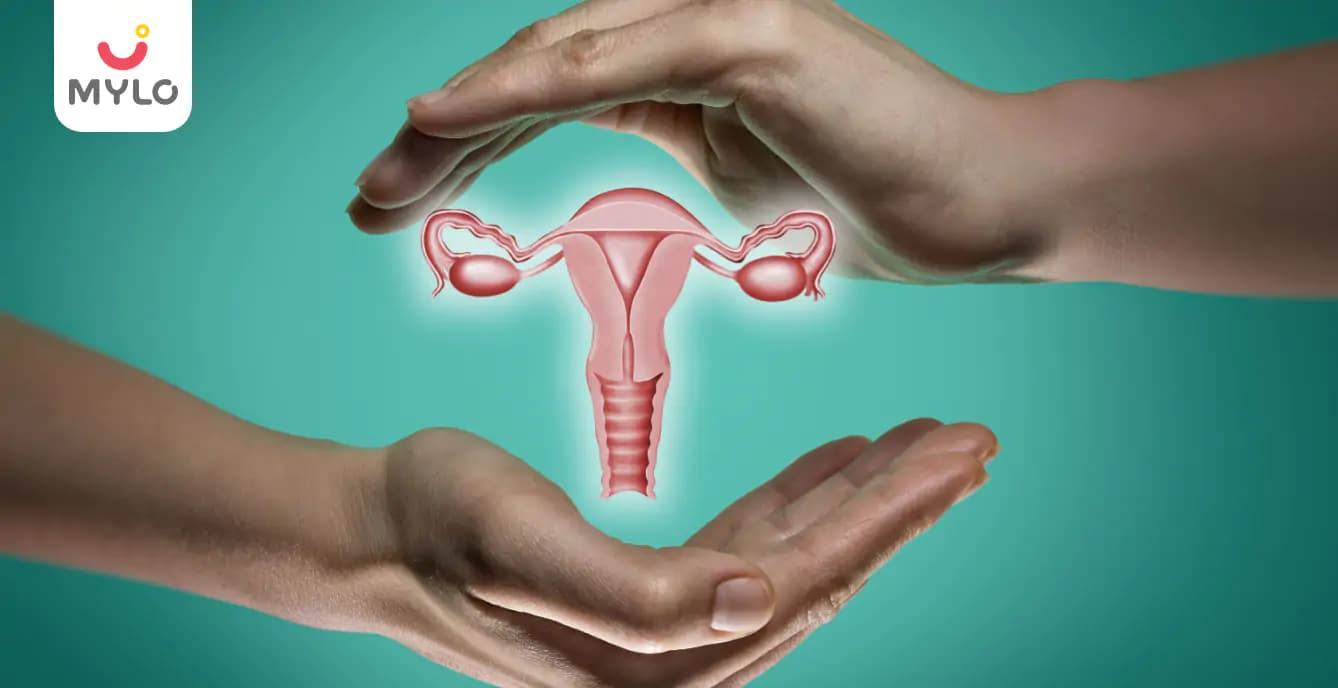
- The finger test for pregnancy involves checking your cervix position and texture at home, where a soft, high cervix may indicate early pregnancy after conception.
- This method is not foolproof and requires practice across 2-3 menstrual cycles to recognise normal cervix changes versus pregnancy-related shifts in position and feel.
- Always maintain hand hygiene, avoid testing after intercourse, and choose a comfortable position like squatting or sitting to safely locate the cervix.
- Looking for a more reliable way to confirm pregnancy? Explore our Baby Wellness Kit | Skincare Gift Set for Newborns.
TL;DR
The "finger test for pregnancy" is a folk method, not a reliable medical test. You cannot accurately confirm pregnancy by inserting a finger to feel your cervix at home (Cleveland Clinic) (NHS). The cervix does change in early pregnancy (it becomes higher, softer and closed), but these same changes also happen around ovulation and before a period, so self-checking gives misleading results and is easy to get wrong. Self-examination can also introduce infection. The only reliable ways to confirm pregnancy are a home urine pregnancy test (about 99% accurate after a missed period) or a blood test (beta-hCG) at a lab. If your period is late, take a proper pregnancy test, do not rely on a finger check.
Quick Answer
The finger test for pregnancy is a folk method, not a reliable medical test. You cannot accurately confirm pregnancy by feeling your cervix at home, because the same changes happen around ovulation and before a period, and self-checking risks infection. The only reliable methods are a home urine pregnancy test (about 99% accurate after a missed period) or a blood test. If your period is late, take a proper test.
Author: Madhavi Gupta, Senior Health Content Editor, Mylo Parenting Desk Medically reviewed by: Dr. Sweta Baajaj, MBBS, MS (Obstetrics & Gynecology), aligned with NHS and ACOG guidance Last updated: 26 June 2026
Medical Disclaimer: This article is for informational purposes only and is not a substitute for professional medical advice. The finger test is not a reliable way to confirm pregnancy. If your period is late or you think you may be pregnant, take a home pregnancy test and consult your doctor. Avoid repeated self-examination, which can cause infection.
Key Takeaways
- The finger test is a folk method, not a medical test (Cleveland Clinic)
- You cannot reliably confirm pregnancy by feeling your cervix at home
- Cervix changes in early pregnancy also happen around ovulation and before a period
- Self-examination can introduce infection
- The reliable methods are a urine pregnancy test or blood test (beta-hCG)
- A home test is about 99% accurate after a missed period (NHS)
- Use first-morning urine for the most accurate early result
- If your period is late, take a test, do not rely on a finger check
Can You Really Check Pregnancy With a Finger?
No, not reliably. This is the most important point. The finger test (feeling your cervix to guess if you are pregnant) is a traditional folk method, not a medical test, and doctors do not recommend it for self-diagnosis (Cleveland Clinic).
The idea is that in early pregnancy the cervix becomes:
- Higher in position
- Softer in texture
- Closed at the opening
The problem is that the cervix changes throughout your cycle anyway, and the early-pregnancy feel is very similar to the ovulation and pre-period feel. So you cannot tell the difference accurately by touch, which is exactly why this method fails.
Why Doesn't the Finger Test Work?
The cervix changes are not unique to pregnancy (NHS):
| Cervix Feel | Could Mean |
|---|---|
| High, soft, closed | Early pregnancy OR around ovulation |
| Low, firm, slightly open | Before or during a period |
| Changing day to day | Normal cycle changes |
Because early pregnancy and ovulation share almost the same cervical feel, the finger test cannot reliably tell them apart. This is why it is not a diagnostic test, only a real pregnancy test can confirm.
Is It Safe to Check Your Cervix With a Finger?
It carries some risk, so it is not recommended for routine self-checking (Cleveland Clinic):
- Risk of infection if hands or nails are not clean
- Scratches or irritation from nails
- Misleading results that cause unnecessary worry or false reassurance
- Not advisable during bleeding, after intercourse, or with any infection
If you ever do a cervical self-check for fertility tracking, wash your hands, keep nails trimmed, and stop if you notice pain, bleeding or discharge. But remember, it cannot confirm pregnancy.
What Cervix Signs Do Doctors Actually Use?
Doctors do look at cervical changes, but only as part of a trained clinical examination, not a home finger test (NCBI/StatPearls):
| Sign | What It Is | When |
|---|---|---|
| Goodell's sign | Softening of the cervix | Around week 4 |
| Chadwick's sign | Bluish colour of the cervix and vagina | Weeks 6 to 8 |
| Hegar's sign | Softening of the lower uterus | Weeks 6 to 12 |
These signs require a doctor's bimanual examination and experience, you cannot assess them yourself with a finger. And even doctors confirm pregnancy with a test and ultrasound, not by feel alone.
What Is the Reliable Way to Confirm Pregnancy?
There are only two reliable methods (NHS) (Cleveland Clinic):
1. Home Urine Pregnancy Test
- Detects the pregnancy hormone hCG in urine
- About 99% accurate when done after a missed period
- Use first-morning urine for the most concentrated hCG
- If negative but your period does not come, retest after 2 to 3 days
2. Blood Test (Beta-hCG) at a Lab
- Detects hCG slightly earlier than urine tests
- Highly accurate and can measure exact hCG levels
- Useful in IVF or when early confirmation is needed
Bottom line: If your period is late, take a home pregnancy test. It is cheap, private, fast and far more accurate than any finger method.
When Should You Take a Pregnancy Test?
For the most accurate result (NHS):
- Test after your missed period (most reliable)
- If you cannot wait, test 10 to 14 days after ovulation
- Use first-morning urine
- Retest in 2 to 3 days if negative but your period still does not come
- A blood test can confirm slightly earlier
What Are the Early Signs of Pregnancy?
These signs are clues, but only a test confirms pregnancy (NHS):
- Missed period (the most common first sign)
- Tender, swollen breasts
- Nausea (morning sickness)
- Fatigue
- Frequent urination
- Light spotting (implantation bleeding)
- Heightened sense of smell or food aversions
These symptoms can have other causes too. If you notice them and your period is late, take a pregnancy test.
When Should You See a Doctor?
Consult a doctor if (NHS):
- Your period is more than a week late but tests are negative
- You have a positive test (to start antenatal care)
- You have severe abdominal pain, especially one-sided (rule out ectopic)
- You have abnormal or heavy bleeding
- You have pain, itching or unusual discharge after any self-examination (possible infection)
Indian Context: What You Should Know
- A very common myth: The finger or "cervix check" method is widely shared in India, but it is not reliable, do not depend on it (NHS)
- Home tests are cheap and private: Pregnancy test kits cost around INR 50 to INR 150 and are available at any pharmacy
- Avoid other folk "tests": Methods using toothpaste, sugar, salt, shampoo or bleach in urine are myths with no scientific basis
- No gender prediction: No test or method can tell the baby's gender early, and gender determination is illegal in India under the PCPNDT Act
- Hygiene matters: Avoid repeated self-examination; if you do, keep hands and nails clean to prevent infection
- See a doctor to confirm: After a positive home test, visit a gynaecologist for confirmation and antenatal care
Myths vs Facts About the Finger Test
| Myth | Fact | Source |
|---|---|---|
| "You can confirm pregnancy with a finger" | False. It is a folk method, not a reliable test | Cleveland Clinic |
| "A high, soft cervix means pregnancy" | False. It also happens around ovulation | NHS |
| "Finger test is more natural and accurate" | False. A urine test is far more accurate | Cleveland Clinic |
| "Toothpaste or sugar urine tests work" | False. These are myths with no scientific basis | NHS |
| "You can feel pregnancy in week 1" | False. hCG and cervical signs take weeks to develop | NCBI |
| "Self-checking the cervix is completely safe" | False. It can cause infection if not careful | Cleveland Clinic |
FAQs: Checking Pregnancy With a Finger
Can you check pregnancy with a finger?
No, not reliably. The finger test is a folk method, not a medical test (Cleveland Clinic). The cervix does change in early pregnancy, but the same changes happen around ovulation, so you cannot tell accurately by touch. Use a home pregnancy test instead.
Finger se pregnancy check kaise karein, kya yeh sahi hai? (Hinglish)
Finger se pregnancy check karna ek folk tarika hai, reliable medical test nahi. Cervix early pregnancy mein high, soft aur closed hota hai, lekin yahi changes ovulation ke time bhi hote hain, isliye finger se sahi pata nahi chalta. Saath hi infection ka risk bhi hai. Sahi tarika hai missed period ke baad home pregnancy test karna (lagbhag 99% accurate) ya doctor se blood test karwana.
Why is the finger test not reliable?
Because the cervix changes (high, soft, closed) seen in early pregnancy also occur around ovulation and vary through the cycle (NHS). Since the feel is so similar, you cannot tell pregnancy apart from normal cycle changes by touch. Only a pregnancy test confirms it.
What is the most accurate way to check pregnancy at home?
A home urine pregnancy test is the most accurate at-home method, about 99% accurate when done after a missed period using first-morning urine (NHS). For earlier or exact confirmation, a blood test (beta-hCG) at a lab can be done.
Is it safe to put a finger inside to check the cervix?
It carries a risk of infection or irritation if hands and nails are not clean, and it gives unreliable results (Cleveland Clinic). It is not recommended as a pregnancy check. Avoid it during bleeding, after intercourse, or if you have any infection.
Pregnancy confirm karne ka sahi tarika kya hai? (Hinglish)
Pregnancy confirm karne ke sirf do reliable tarike hain: missed period ke baad home urine pregnancy test (subah ke pehle urine se, lagbhag 99% accurate) ya lab mein blood test (beta-hCG). Finger test, toothpaste test ya sugar test reliable nahi hain. Period late ho toh proper pregnancy test karein aur doctor se milein.
Can a doctor tell pregnancy by examination?
A doctor may notice cervical signs (like Goodell's, Chadwick's or Hegar's sign) during a trained clinical examination, but they still confirm pregnancy with a test and ultrasound (NCBI). These signs cannot be assessed accurately by yourself at home.
Do toothpaste or sugar pregnancy tests work?
No. Home "tests" using toothpaste, sugar, salt, shampoo or bleach in urine are myths with no scientific basis (NHS). They are unreliable. Use a proper pregnancy test kit, which is inexpensive and far more accurate.
When should I take a pregnancy test?
Take a test after your missed period for the most reliable result, or at the earliest 10 to 14 days after ovulation, using first-morning urine (NHS). If negative but your period does not come, retest in 2 to 3 days.
References
- Cleveland Clinic. "Pregnancy Tests." https://my.clevelandclinic.org/health/diagnostics/9703-pregnancy-tests
- NHS UK. "Doing a Pregnancy Test." https://www.nhs.uk/pregnancy/trying-for-a-baby/doing-a-pregnancy-test/
- NHS UK. "Signs and Symptoms of Pregnancy." https://www.nhs.uk/pregnancy/trying-for-a-baby/signs-and-symptoms-of-pregnancy/
- NCBI / StatPearls. "Pregnancy Diagnosis and Signs." https://www.ncbi.nlm.nih.gov/books/NBK430763/
- ACOG. "Evaluating Infertility and Pregnancy." https://www.acog.org/womens-health/faqs/evaluating-infertility
- FOGSI (Federation of Obstetric and Gynaecological Societies of India). https://www.fogsi.org/

Article Posted Under
Related Articles



Related Topics
.webp&w=32&q=75)
Medical Disclaimer
This content is for informational purposes only and should not replace professional medical advice. Consult with a physician or other health care professional if you have any concerns or questions about your health. If you rely on the information provided here, you do so solely at your own risk.


AWARDS AND RECOGNITION

Mylo wins Forbes D2C Disruptor award

Mylo wins The Economic Times Promising Brands 2022
AS SEEN IN













- Mylo Care: Effective and science-backed personal care and wellness solutions for a joyful you.
- Mylo Baby: Science-backed, gentle and effective personal care & hygiene range for your little one.
- Mylo Community: Trusted and empathetic community of 10mn+ parents and experts.


Product Categories
Baby Carrier | Baby Soap | Baby Wipes | Stretch Marks Cream | Baby Cream | Baby Shampoo | Baby Massage Oil | Baby Hair Oil | Stretch Marks Oil | Baby Body Wash | Baby Powder | Baby Lotion | Diaper Rash Cream | Newborn Diapers | Teether | Baby Kajal | Baby Diapers Pants | Cloth Diapers | Laundry Detergent | Lactation Granules |