


Orders
.png&w=48&q=75 "login")
Profile


Wallet

Navel Displacement (Naaf Khisakna, Dharan): What It Really Is, Causes and Treatment (2026)


BDS (Gold Medalist), Certified Lactation Consultant – BPNI Delhi, Maternal & Infant Nutrition Expert · 15 years experience
 15 Likes|
 10 min
Quick Answer
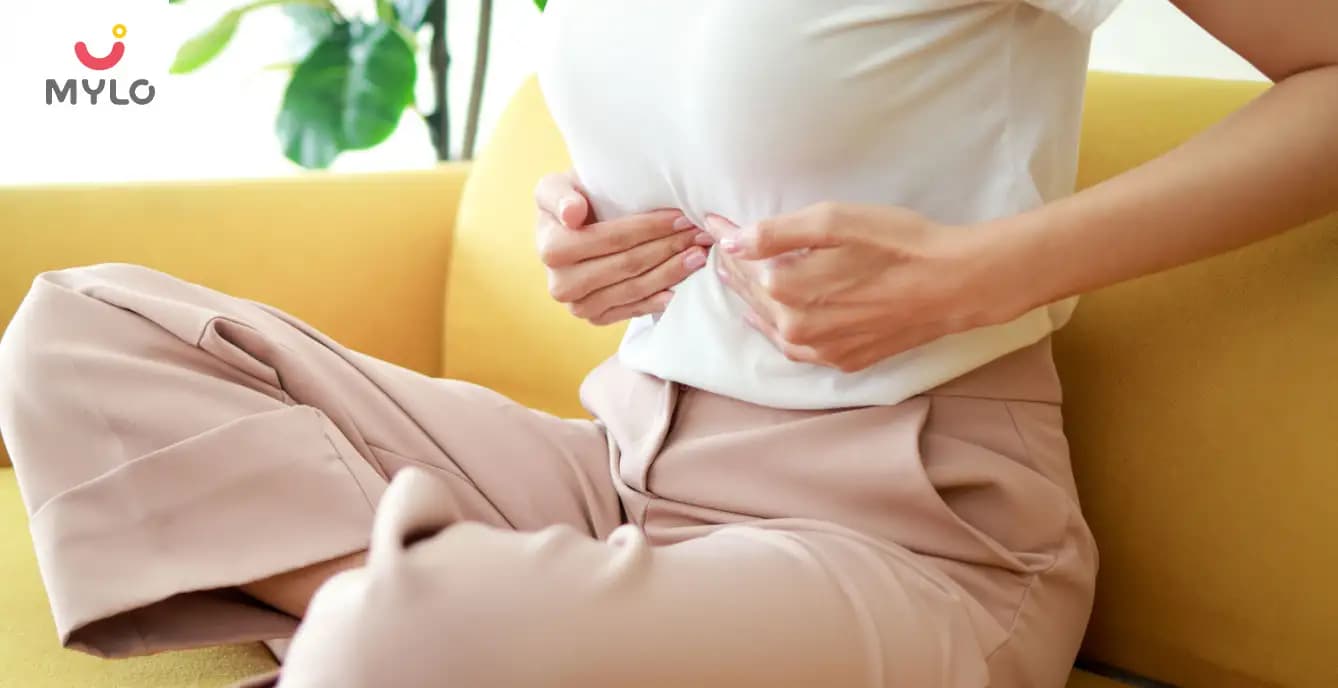
Navel displacement (naaf khisakna, dharan) is a traditional folk belief, not a medical diagnosis. The navel does not actually move. The pain or digestive problems blamed on it usually come from real causes like an umbilical hernia, diastasis recti, IBS, constipation, gastritis or ovarian issues. Gentle home care may help mild discomfort, but vigorous navel-pulling can harm. See a doctor for proper diagnosis if pain is severe or you notice a lump, vomiting or fever.
Author: Loveleen Gupta, Senior Health Content Editor, Mylo Parenting Desk
Medically reviewed by: Mylo Editorial Board, aligned with NHS, Cleveland Clinic and FOGSI guidance
Last updated: 03 August 2026
Medical Disclaimer: This article is for informational purposes only and is not a substitute for professional medical advice. "Navel displacement" is not a recognised medical diagnosis, and several conditions that mimic it need a doctor's evaluation. If you have severe or persistent pain, a hard or growing lump, bleeding, vomiting, fever, or a missed period with pelvic pain, see a doctor promptly. Do not let untrained people forcefully pull or press your abdomen.
Key Takeaways
- "Navel displacement" is a folk concept, not a medical diagnosis (NCBI).
- There is no evidence the navel physically moves.
- The symptoms usually have real, treatable causes (hernia, IBS, constipation, etc.).
- Gentle home care may ease mild discomfort.
- Forceful navel-pulling or pinching can be harmful, avoid it.
- See a doctor for proper diagnosis, especially with red-flag symptoms.
- Conditions often mistaken for it: umbilical hernia, diastasis recti, IBS, gastritis, ovarian cyst, appendicitis.
What Is "Navel Displacement" (Naaf Khisakna, Dharan)?
In South Asian folk medicine, navel displacement (naaf khisakna, dharan, naas khisakna, dheran) is the belief that the navel or a "pulse" near it has shifted out of place, causing belly pain and digestive problems (NCBI/StatPearls).
However, it is important to know:
- It is a culture-bound concept, widely believed but not a recognised medical diagnosis.
- It does not appear in modern medical classifications (such as ICD-11) or in FOGSI guidance.
- There is no scientific evidence that the navel physically moves.
This does not mean the pain is imaginary. It is real, but it usually comes from an actual medical cause that deserves proper diagnosis.
What Symptoms Do People Blame on Navel Displacement?
People often attribute these symptoms to "naaf khisakna":
- Sharp or pulling pain around the belly button
- Nausea, diarrhoea or constipation
- A visible bulge or shifted look of the navel
- Lower back or thigh pain
- Irregular or painful periods (in women)
These are real symptoms, but they point to identifiable conditions, not a moved navel. That is why a medical check-up matters.
What Are the Actual Medical Causes?
Conditions commonly mistaken for "navel displacement" include (NHS, Cleveland Clinic):
| Condition | What It Is |
|---|---|
| Umbilical hernia | A bulge near the navel when tissue pushes through the muscle |
| Diastasis recti | Separation of the abdominal muscles (common after pregnancy) |
| Irritable bowel syndrome (IBS) | Gut disorder causing pain, bloating, bowel changes |
| Gastritis or peptic ulcer | Stomach lining inflammation causing upper-belly pain |
| Constipation | Hard stools causing cramping and bloating |
| Ovarian cyst or endometriosis | Pelvic causes of lower abdominal pain in women |
| Appendicitis | Pain that often starts near the navel and moves to the lower right (emergency) |
| Muscle strain | From heavy lifting or sudden movement |
Because some of these (like appendicitis or ovarian problems) can be serious, never ignore persistent or severe belly pain by assuming it is just "dharan".
Do Home Remedies for Navel Displacement Work?
Some traditional measures may soothe mild discomfort, but they are unproven and do not "fix" a displaced navel (because the navel does not actually move) (NCBI):
Generally gentle and low-risk:
- Warm compress on the belly for cramps
- Staying hydrated and eating fibre (helps constipation)
- Fennel (saunf) or jeera water for mild gas
- Gentle, light abdominal self-massage
- Adequate rest
Use caution:
- Mustard oil in the navel is a common practice; it is usually harmless but does not cure any condition.
- Amla or other applications have no proven effect on belly pain.
Important safety warning: Forceful navel-pulling, pinching, or "setting the naas" by untrained people can cause injury, bruising or worsen a hernia. Avoid these aggressive methods. If pain persists, see a doctor instead.
Which Yoga Poses May Help Mild Abdominal Discomfort?
Gentle yoga can support digestion and core strength for mild discomfort (not a cure, and avoid if you have a hernia, are pregnant, or have severe pain) (FOGSI):
- Pawanmuktasana (wind-releasing pose) for gas
- Setu Bandhasana (bridge pose)
- Markatasana (spinal twist)
- Uttanpadasana (gentle leg raise, avoid with back issues)
Stop any pose that causes pain, and check with a doctor before starting yoga if you have a hernia, recent surgery or are pregnant.
When Should You See a Doctor? (Red Flags)
See a doctor promptly, or seek emergency care, if you have (NHS, Cleveland Clinic):
- Severe or persistent belly pain
- A hard, growing or painful lump near the navel (possible hernia, urgent)
- Bleeding or discharge from the navel
- Vomiting or fever above 38°C (100.4°F)
- Pain that moves to the lower right belly with nausea (possible appendicitis, emergency)
- A missed period with pelvic pain (rule out pregnancy or ovarian issue)
- Pain after heavy lifting that does not settle
- Any symptom that worries you
A hernia that becomes hard, painful, red or cannot be pushed back is a medical emergency, go to a hospital immediately.
Indian Context: What You Should Know
- Very common belief: "Naaf khisakna" or "dharan" is widely believed across India, but modern medicine does not recognise the navel as moving (NCBI).
- Do not delay diagnosis: Treating real pain as just "dharan" can delay care for a hernia, appendicitis or ovarian problem.
- Avoid aggressive folk treatments: Forceful pulling or pressing by untrained practitioners can cause harm.
- Home comfort measures are fine for mild gas or constipation (saunf, jeera water, fibre, hydration), but they are not a cure.
- Umbilical hernia is common after pregnancy: If you notice a bulge near the navel post-delivery, see a doctor (Cleveland Clinic).
- When in doubt, get examined: A simple clinical check (and sometimes an ultrasound) can identify the real cause quickly.
Myths vs Facts About Navel Displacement
| Myth | Fact | Source |
|---|---|---|
| "The navel can shift out of place" | False. There is no evidence the navel moves | NCBI |
| "Pulling or pressing fixes a displaced navel" | False, and forceful methods can cause injury | NHS |
| "Mustard oil in the navel cures the pain" | False. It may soothe but does not cure any condition | NCBI |
| "Navel pain is always just dharan" | False. It can be a hernia, IBS, appendicitis and more | Cleveland Clinic |
| "Home remedies are enough for severe pain" | False. Severe or persistent pain needs a doctor | NHS |
| "A bulge near the navel is harmless" | False. It may be a hernia that needs evaluation | Cleveland Clinic |
FAQs: Navel Displacement (Naaf Khisakna, Dharan)
Is navel displacement a real medical condition?
No, not as a medical diagnosis. "Navel displacement" (naaf khisakna, dharan) is a traditional folk belief, and there is no scientific evidence the navel physically moves (NCBI). The pain people feel is real, but it usually comes from a treatable condition like a hernia, IBS or constipation.
Naaf khisakna ya dharan kya sach mein hota hai? (Hinglish)
Naaf khisakna ya dharan ek traditional belief hai, medical diagnosis nahi. Navel sach mein apni jagah se nahi hatti, iska koi scientific proof nahi hai. Jo pet dard, nausea ya constipation log isse jodte hain, woh aksar real causes se hota hai jaise umbilical hernia, IBS, gas, constipation ya ovarian problem. Severe pain ya lump ho toh doctor ko zaroor dikhayein.
What actually causes pain around the navel?
Common real causes include an umbilical hernia, diastasis recti, IBS, gastritis, constipation, ovarian cyst or appendicitis (NHS, Cleveland Clinic). Because some are serious, persistent or severe navel pain should be checked by a doctor, not assumed to be "dharan".
Are home remedies for navel displacement safe?
Gentle measures (warm compress, hydration, fibre, fennel water, light massage) are usually low-risk for mild discomfort, but they do not "fix" a displaced navel because the navel does not move (NCBI). Avoid forceful navel-pulling or pinching, which can cause injury.
Naaf ke dard ke liye gharelu upay kaunse safe hain? (Hinglish)
Halke discomfort ke liye warm compress, paani zyada peena, fibre wala khana, saunf ya jeera ka paani, aur halki massage low-risk hain. Lekin yeh kisi bimari ka ilaaj nahi hain. Zabardasti naaf kheechna ya dabana nahi chahiye, isse chot lag sakti hai. Agar dard severe ho ya lump dikhe toh doctor ke paas jayein.
When is navel pain an emergency?
Seek emergency care if you have a hard, painful or red lump near the navel (possible trapped hernia), pain moving to the lower right belly with nausea (possible appendicitis), vomiting with fever, or severe, worsening pain (NHS). These need immediate medical attention.
Can a doctor find the real cause of navel pain?
Yes. A doctor can usually identify the cause with a simple clinical examination and, if needed, an ultrasound or other tests (Cleveland Clinic). This is far more reliable than assuming it is "navel displacement".
Is a bulge near the belly button serious?
It may be an umbilical hernia, which should be evaluated by a doctor (Cleveland Clinic). Many are harmless and managed simply, but a hernia that becomes hard, painful or cannot be pushed back is an emergency. Get it checked.
References
- NCBI / StatPearls. Culture-Bound Syndromes. ncbi.nlm.nih.gov
- NHS UK. Hernia. nhs.uk
- Cleveland Clinic. Diastasis Recti. my.clevelandclinic.org
- NHS UK. Irritable Bowel Syndrome (IBS). nhs.uk
- NHS UK. Appendicitis. nhs.uk
- FOGSI (Federation of Obstetric and Gynaecological Societies of India). fogsi.org
Article Posted Under
Related Articles
Mylo: The Made-in-India Pregnancy and Parenting App Built for Indian Parents
 7 min
7 min Diwali During Pregnancy: Safety Tips for Pregnant Women on Crackers, Sweets and Diet
 17 min
 Best Pregnancy and Parenting App in India: 5 Must-Have Features to Look For (2026)
 20 min
 Best Hairstyles for Postpartum Hair Loss and Regrowth
 10 min
Related Topics
.webp&w=32&q=75)
Medical Disclaimer
This content is for informational purposes only and should not replace professional medical advice. Consult with a physician or other health care professional if you have any concerns or questions about your health. If you rely on the information provided here, you do so solely at your own risk.


AWARDS AND RECOGNITION

Mylo wins Forbes D2C Disruptor award

Mylo wins The Economic Times Promising Brands 2022
AS SEEN IN













- Mylo Care: Effective and science-backed personal care and wellness solutions for a joyful you.
- Mylo Baby: Science-backed, gentle and effective personal care & hygiene range for your little one.
- Mylo Community: Trusted and empathetic community of 10mn+ parents and experts.


Product Categories
Baby Carrier | Baby Soap | Baby Wipes | Stretch Marks Cream | Baby Cream | Baby Shampoo | Baby Massage Oil | Baby Hair Oil | Stretch Marks Oil | Baby Body Wash | Baby Powder | Baby Lotion | Diaper Rash Cream | Newborn Diapers | Teether | Baby Kajal | Baby Diapers Pants | Cloth Diapers | Laundry Detergent | Lactation Granules |