


Orders
.png&w=48&q=75 "login")
Profile


Wallet

Can You Check Your Stomach for Pregnancy? The Honest Truth and What Actually Works (2026)


BDS (Gold Medalist), Certified Lactation Consultant – BPNI Delhi, Maternal & Infant Nutrition Expert · 15 years experience
 3 Likes|
 13 min
AI-Generated Summary
Quick overview in 30 seconds.webp&w=32&q=75)
- Feeling your stomach cannot confirm pregnancy because during the first 12 weeks the uterus sits deep behind the pubic bone and cannot be detected by touch.
- A firm or hard lower belly in early weeks is almost always caused by gas, bloating, constipation or a full bladder, not a growing baby.
- Reliable ways to confirm pregnancy include a home urine test (around 99% accurate after a missed period), a beta-hCG blood test or an ultrasound scan.
- Ready to confirm your pregnancy the reliable way? Explore our Baby Wellness Kit | Skincare Gift Set for Newborns.
 4.7
4.7Quick Answer
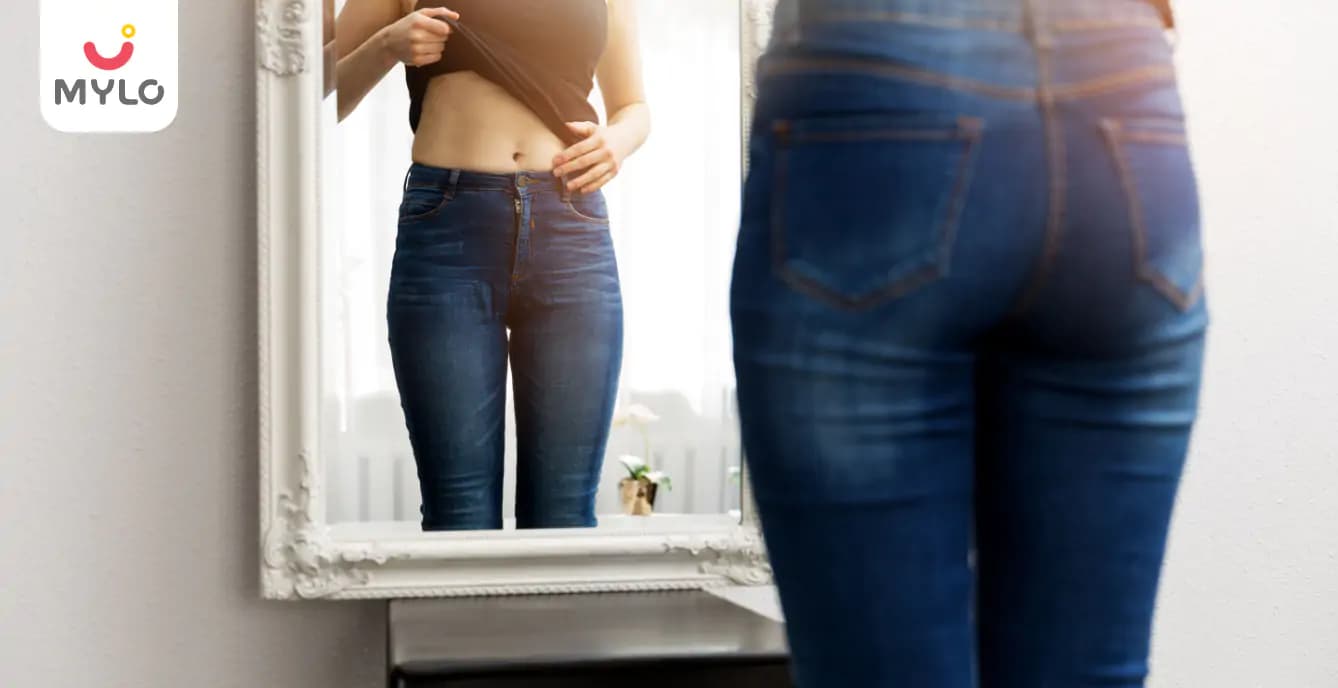
Feeling your belly will not tell you whether you are pregnant. In the early weeks, your womb is still tiny and sits low down, hidden behind the pubic bone, so there is simply nothing to detect through the abdominal wall (Cleveland Clinic, NHS). If your lower tummy feels firm or bloated, that is almost always gas, constipation or a full bladder, not a growing baby. Pressing on your stomach is a traditional guess, not a test, and pushing hard can hurt. To actually know, use a home urine test (around 99% accurate once your period is late), a blood test for beta-hCG, or an ultrasound. When your period is overdue, reach for a test, not your fingertips.
Author: Madhavi Gupta, Senior Health Content Editor, Mylo Parenting Desk
Medically reviewed by: Dr Sweta Baajaj
Last updated: 7 August 2026
Medical Disclaimer: This article is for general information only and does not replace advice from your doctor. The stomach check cannot confirm pregnancy. If your period is late or you suspect you are pregnant, take a home pregnancy test and speak to a doctor. Never press your abdomen forcefully.
Key Takeaways
Feeling your stomach is not a reliable way to detect pregnancy (Cleveland Clinic).
In the first trimester the womb is too small and sits too deep to feel by hand.
A firm or swollen lower belly is usually gas, constipation or bloating, not a baby.
The stomach check is a folk habit, not a diagnostic test.
Do not press hard; it will not help and can cause pain.
Reliable confirmation comes from a urine test, blood test (beta-hCG) or ultrasound.
A home test is about 99% accurate once your period is late (NHS).
Late period? Take a test instead of relying on touch.
Does the "Stomach Check" Actually Work?
In short, no, particularly early on. Through most of the first trimester your uterus stays tucked low in the pelvis, shielded by the pubic bone, so no amount of prodding will reveal a pregnancy (Cleveland Clinic).
Up to around 12 weeks: the womb grows from about the size of a lemon to a small grapefruit, but it is still hidden behind the pelvic bone, with nothing distinct to feel.
A hard lower tummy this early is far more likely to be trapped gas, bloating or a full bladder than the uterus itself.
The area around your belly button is the wrong place to check anyway; any early change sits much lower, just above the pubic bone.
That is why the stomach check keeps failing: it is folklore, not a diagnostic tool.
Why Touch Cannot Tell You
A few things get in the way of feeling anything meaningful (Cleveland Clinic):
What gets in the way | Why it matters |
|---|---|
It is simply too early (before 12 weeks) | The uterus is still deep in the pelvis and cannot be felt |
A tilted (retroverted) uterus | Common, and it points the womb away from your hand |
Gas or bloating | Feels firm, but it is your bowel, not your uterus |
Tummy fat or muscle tone | Masks any subtle change completely |
Guesswork technique | Normal tissue is very easy to misread |
Even trained hands cannot separate very early uterine growth from ordinary tummy tissue this early. And in the roughly 1 in 5 women who naturally have a retroverted (backward-tilting) uterus, the womb leans away from the abdominal wall, so it is essentially impossible to feel from outside in the first trimester (American College of Obstetricians and Gynecologists, ACOG).
My Lower Belly Feels Hard, Could I Be Pregnant?
Most likely not from pregnancy. A firm lower tummy usually traces back to everyday causes (NHS):
Gas and bloating
Constipation
A full bladder
Bloating around your period
Occasionally fibroids or an ovarian cyst, which a doctor should assess
A bump you can genuinely see and feel only shows up later, generally after 16 to 20 weeks. So a hard belly in the first few weeks tells you very little about pregnancy.
Is It Safe to Press on Your Belly to Check?
A light touch does no harm, but firm pressing is a bad idea and pointless (Cleveland Clinic):
Gentle contact is fine, yet it still will not confirm anything.
Pushing hard or repeatedly only causes discomfort, since an early pregnancy cannot be felt regardless.
If you notice pain, a lump or lasting firmness, see a doctor rather than pressing more.
Doctors are clear that forceful poking should be avoided. Deep pressing cannot get past the pubic bone to reach an early pregnancy, and it can leave you with sore muscles, bruising on the abdominal wall, or worse tummy cramps. If you feel a tender spot or a firm, persistent lump, book a check with your gynaecologist instead of examining yourself.
The Signs Worth Watching (Better Than Feeling)
Your body's symptoms are a far better hint than your hands, though they still need a test to confirm (NHS):
A missed period, the most common first clue
Tender, swollen breasts
Light cramping or a little spotting (implantation)
Bloating
Unusual tiredness
Needing to pee more often
Nausea or morning sickness
A sharper sense of smell or new food aversions
Any of these can have other explanations, so if they show up and your period is late, take a pregnancy test.
How to Confirm Pregnancy Reliably
Three methods actually work (NHS, Cleveland Clinic):
Method | Accuracy | Best timing |
|---|---|---|
Home urine test | About 99% | After a missed period |
Blood test (beta-hCG) | Very high | A little earlier than urine tests |
Ultrasound | Confirms and dates the pregnancy | From around 6 weeks |
Bottom line: once your period is late, do a home test with first-morning urine. It is cheap, private, quick and far more trustworthy than any stomach check, then see your doctor to confirm.
When Is the Right Time to Test?
For the most dependable result (NHS):
Test after your period is due, which is the most reliable point.
If you cannot wait, try 10 to 14 days after ovulation.
Use your first urine of the morning.
If it is negative but your period still does not arrive, retest in 2 to 3 days.
A blood test can pick things up slightly sooner.
When Does a Real Bump Appear?
A visible, touchable bump builds up gradually (NHS):
Weeks | What you may notice |
|---|---|
1 to 12 | No visible change; your belly looks normal |
12 to 16 | A slight roundness low down |
16 to 20 | A clearer bump begins to show |
20 and beyond | Steady, obvious growth |
First-time mothers usually show later than those who have been pregnant before, so noticing nothing early on is completely normal.
When to See a Doctor
Check in with a doctor if (NHS):
Your period is over a week late but tests keep coming back negative.
You have a positive test and want to start antenatal care.
You feel a firm lump low in your belly (to rule out fibroids or a cyst).
You have severe or one-sided abdominal pain (to rule out an ectopic pregnancy).
You have unusual or heavy bleeding.
Indian Context: What to Keep in Mind
A widespread belief: feeling the lower belly to guess pregnancy is common across India, but it is not dependable (NHS).
Tests are affordable and private: pregnancy kits cost roughly INR 50 to INR 150 at any chemist.
Skip the other folk tests: toothpaste, sugar, salt or shampoo "urine tests" have no scientific basis.
No early gender clues: nothing can reveal the baby's sex early, and sex determination is illegal in India under the PCPNDT Act.
Go easy on your belly: avoid forceful pressing, and see a doctor if you feel a lump or pain.
Confirm properly: after a positive home test, visit a gynaecologist.
Myths vs Facts
Myth | Fact | Source |
|---|---|---|
"Press your stomach and you can feel a pregnancy" | False. The early uterus is too deep to feel | Cleveland Clinic |
"A hard lower belly means you are pregnant" | False. It is usually gas, bloating or constipation | NHS |
"Pregnancy is felt near the belly button" | False. The uterus sits much lower, behind the pubic bone | Cleveland Clinic |
"Feeling the belly is more natural than testing" | False. A urine test is far more accurate | NHS |
"No early bump means you are not pregnant" | False. Bumps appear later, around 12 to 20 weeks | NHS |
"Toothpaste or sugar urine tests work" | False. These have no scientific basis | NHS |
FAQs: Checking Your Stomach for Pregnancy
Can you tell you are pregnant by feeling your stomach?
No, not dependably. For the first 12 weeks or so, the uterus is small and sits deep behind the pubic bone, so it cannot be felt from outside (Cleveland Clinic). A firm belly is usually gas or bloating. A home pregnancy test is the way to confirm.
Pet dabakar pregnancy check kar sakte hain kya? (Hinglish)
Nahi, pet dabakar pregnancy pata karna reliable nahi hai. Pehle 12 hafton mein uterus chhota hota hai aur pelvic bone ke peeche gehrai mein hota hai, isliye bahar se feel nahi hota. Nichla pet hard lagna aksar gas, constipation ya bloating hota hai. Sahi tarika hai period miss hone ke baad home urine test karna, ya doctor se blood test (beta-hCG) ya ultrasound karwana.
Why does my lower belly feel hard, am I pregnant?
A firm lower tummy is far more often down to gas, bloating, constipation or a full bladder than pregnancy (NHS). A real, firm bump only develops after about 16 to 20 weeks. If your period is late, take a test to be sure.
What is the most accurate at-home way to check?
A home urine pregnancy test, about 99% accurate when done after a missed period with first-morning urine (NHS). For earlier or exact confirmation, your doctor can arrange a blood test or ultrasound.
Pregnancy confirm karne ka sahi tarika kya hai? (Hinglish)
Reliable tarike hain: period miss hone ke baad home urine test (subah ke pehle urine se, lagbhag 99% accurate), lab mein blood test (beta-hCG), ya doctor dwara ultrasound. Pet dabakar ya toothpaste-sugar wale tests reliable nahi hain. Period late ho toh proper test karein aur doctor se milein.
Is it safe to press my belly to check?
A gentle touch is harmless, but firm pressing is not advised and is pointless, since an early pregnancy cannot be felt anyway (Cleveland Clinic). If you feel a lasting lump or pain, see a doctor rather than pressing harder.
When does a bump usually start to show?
A visible bump generally appears between 12 and 20 weeks, later for first pregnancies (NHS). In the first trimester there is no visible change, so seeing or feeling nothing early on is normal.
Do toothpaste or sugar pregnancy tests work?
No. Home "tests" using toothpaste, sugar, salt or shampoo in urine have no scientific basis (NHS) and are unreliable. Use a proper pregnancy test kit, which is inexpensive and far more accurate.
References
Cleveland Clinic. Pregnancy Tests. my.clevelandclinic.org
NHS UK. Doing a Pregnancy Test. nhs.uk
NHS UK. Signs and Symptoms of Pregnancy. nhs.uk
NHS UK. Bloating. nhs.uk
NHS UK. Pregnancy, week by week. nhs.uk
American College of Obstetricians and Gynecologists (ACOG). acog.org
FOGSI (Federation of Obstetric and Gynaecological Societies of India). fogsi.org


Trusted by Women Waiting for Their Big News
When your period is late, a reliable home pregnancy test gives you the clarity and confidence your fingertips simply cannot.
Pregnancy Massage Oil + Coconut Oil - 200 ml each



Article Posted Under
Related Articles


Related Topics
.webp&w=32&q=75)
Medical Disclaimer
This content is for informational purposes only and should not replace professional medical advice. Consult with a physician or other health care professional if you have any concerns or questions about your health. If you rely on the information provided here, you do so solely at your own risk.


AWARDS AND RECOGNITION

Mylo wins Forbes D2C Disruptor award

Mylo wins The Economic Times Promising Brands 2022
AS SEEN IN












- Mylo Care: Effective and science-backed personal care and wellness solutions for a joyful you.
- Mylo Baby: Science-backed, gentle and effective personal care & hygiene range for your little one.
- Mylo Community: Trusted and empathetic community of 10mn+ parents and experts.


Product Categories
Baby Carrier | Baby Soap | Baby Wipes | Stretch Marks Cream | Baby Cream | Baby Shampoo | Baby Massage Oil | Baby Hair Oil | Stretch Marks Oil | Baby Body Wash | Baby Powder | Baby Lotion | Diaper Rash Cream | Newborn Diapers | Teether | Baby Kajal | Baby Diapers Pants | Cloth Diapers | Laundry Detergent | Lactation Granules |