


Orders
.png&w=48&q=75 "login")
Profile


Wallet

The Ultimate Guide to Home Remedies for Diaper Rash
 1 Likes|
 10 min
TL;DR
Most diaper rash clears at home with the basics that doctors themselves recommend: change the diaper often, clean gently, let the skin air-dry, and apply a zinc oxide or petroleum jelly barrier cream (Mayo Clinic) (AAP). An important myth to bust: "natural" does not automatically mean safe. Several popular home remedies are NOT recommended for babies, including tea tree and other essential oils, honey (botulism risk under 1 year), baking soda baths, and cornstarch or other powders (they can be inhaled and can feed a yeast rash) (Mayo Clinic). Always patch-test a new remedy, and see a doctor if the rash blisters, bleeds, has pus, brings fever, or does not improve in 2 to 3 days (AAD).
Quick Answer
The safest, most effective home care for diaper rash is: change diapers frequently, clean gently with water or a mild wipe, pat dry, give air time, and use a zinc oxide or petroleum jelly barrier cream. Gentle extras like a little coconut oil, shea butter or a few drops of breast milk are generally fine. Avoid tea tree and essential oils, honey, baking soda baths, and cornstarch or talc powders, these are not recommended for babies. Patch-test anything new, and see a doctor if the rash is severe, has pus or blisters, comes with fever, or is not improving in a couple of days.
Author: Mylo Editorial Team, Mylo Parenting Desk Medically reviewed by: Mylo Editorial Board, aligned with AAP, NHS and IAP (Indian Academy of Pediatrics) guidance Last updated: 16 July 2026
Medical Disclaimer: This article is for informational purposes only and is not a substitute for professional medical advice. Do not use essential oils, honey or medicated creams on a baby without a doctor's guidance. See your paediatrician if the rash is severe, blistering, bleeding, has pus, spreads, comes with fever, or does not improve within 2 to 3 days.
Key Takeaways
- Frequent changing, gentle cleaning, air-drying and a barrier cream treat most rashes (Mayo Clinic)
- Zinc oxide or petroleum jelly barrier creams are the recommended first-line (AAP)
- "Natural" does NOT mean safe; some popular remedies can harm babies
- AVOID: tea tree and essential oils, honey, baking soda baths, cornstarch and talc powders
- Honey should never be given to babies under 1 year (botulism risk)
- Cornstarch and powders can be inhaled and can feed a yeast rash
- Always patch-test a new remedy on a small area first
- See a doctor if the rash blisters, bleeds, has pus, brings fever, or lasts beyond 2 to 3 days (AAD)
First, the Truth About "Home Remedies vs Commercial Creams"
A common belief is that "natural" home remedies are gentle while commercial creams are "harsh chemicals." That is misleading. The most effective and safest treatment for ordinary diaper rash is a simple barrier cream with zinc oxide or petroleum jelly, which doctors and dermatologists actively recommend (Mayo Clinic). These are not harsh; they protect the skin from moisture.
Meanwhile, several "natural" remedies (essential oils, honey, baking soda) can actually irritate or harm a baby. So judge each remedy on evidence and safety, not on the word "natural."
Read more: Cloth Diapers vs Disposable Diapers: Pros and Cons
Safe Home Care That Actually Works
These are the genuinely safe, effective steps, and the first four are the real treatment:
| Remedy | Why It Helps |
|---|---|
| Frequent diaper changes | The single most important step; keeps skin off wetness and stool (AAD) |
| Gentle cleaning | Water and cotton or a mild, fragrance-free wipe, front to back |
| Air-drying and nappy-free time | Fresh air helps the skin heal |
| Zinc oxide or petroleum jelly barrier cream | Protects skin from moisture; the recommended first-line |
| A little coconut oil | Mild moisturiser with soothing properties |
| Shea butter | Gentle natural moisturiser |
| A few drops of breast milk | Some studies suggest it may help mild rash (Seifi et al., 2017) |
Keep the fit right too, a diaper that is too tight traps moisture and rubs, so make sure it is snug but not tight, with the leg cuffs pulled out.
Popular Remedies You Should AVOID on Babies
This is the part most "20 remedies" lists get wrong. The following are commonly suggested but are NOT recommended for babies:
| Avoid | Why |
|---|---|
| Tea tree oil and other essential oils | Can irritate and be absorbed through baby skin; tea tree can be toxic to infants |
| Honey (including Manuka) | Never give honey to a baby under 1 year, botulism risk; and babies put hands in mouth |
| Baking soda baths | Can irritate delicate, broken skin and alter its natural balance (Mayo Clinic) |
| Cornstarch or potato starch powder | Can be inhaled, and can feed a yeast (Candida) rash, making it worse |
| Talcum powder | Not recommended; fine particles can be inhaled |
| Witch hazel, Epsom salt, essential-oil blends | Not established as safe for a baby's diaper area |
| Plain yogurt on the skin | No good evidence; food on broken skin is not advisable |
If you have read these as "home remedies" elsewhere, this is exactly why checking safety matters. When in doubt, stick to the safe list above or ask your doctor.
Read more: Do you need to change your baby's reusable cloth diaper after every episode of pee?
How to Use a Barrier Cream Correctly
Barrier cream is the mainstay, so use it well:
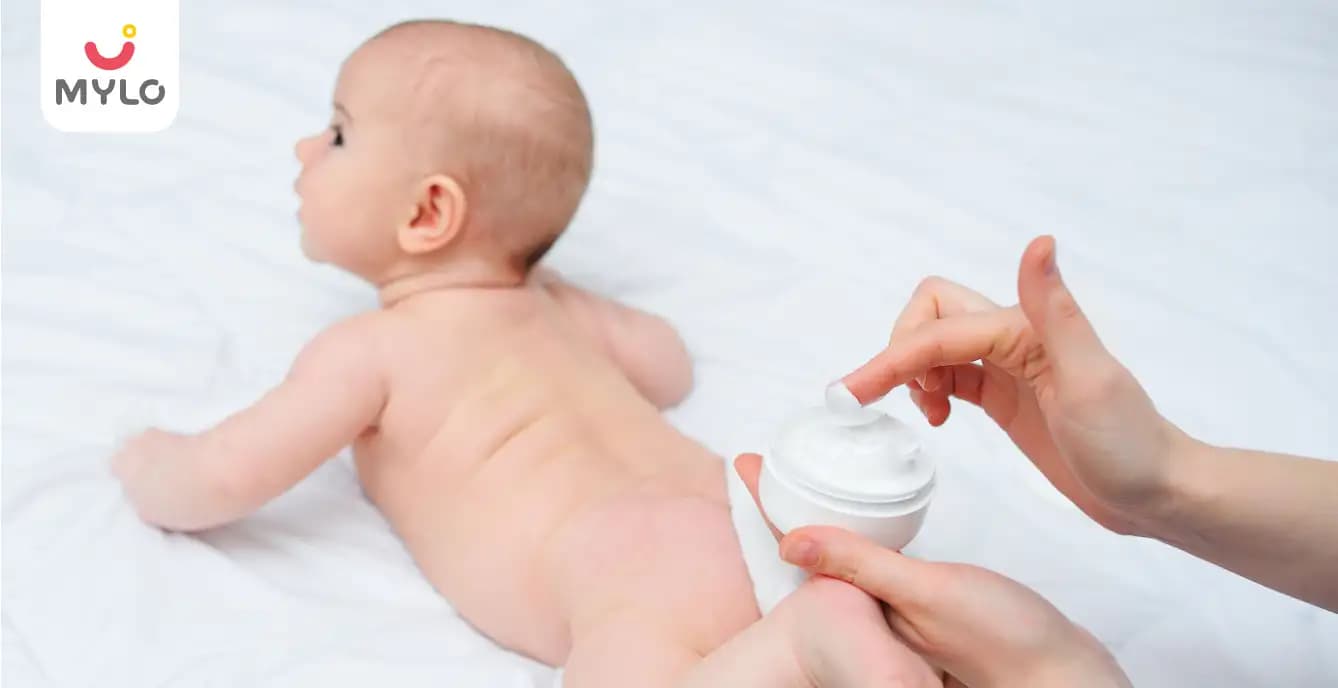
- Apply a thick layer of zinc oxide or petroleum jelly at the first sign of redness, like icing a cake, you do not need to fully wipe off the previous layer each time
- Make sure the skin is clean and dry first
- Use it as protection when needed, not necessarily at every single change if your baby's skin is fine
- If using cloth diapers, place a liner between the cream and the cloth, as cream reduces absorbency
Precautions With Any Home Remedy
- Patch-test first: apply a small amount to a small area and wait 24 hours for any reaction before using more
- Keep good hygiene: clean gently, pat dry (do not rub), and change often
- Avoid tight diapers: they trap moisture and rub; ensure airflow and the right size
- Watch the diet trigger: starting solids or new foods can change stools and irritate skin
- Do not layer many products: more is not better, and mixing remedies makes reactions hard to trace
- See a doctor if unsure: especially before using anything medicated
When to See a Doctor
Home care handles most rashes, but see your paediatrician if:
- The rash blisters, bleeds, oozes or has pus or yellow crust
- It is bright red with small "satellite" spots (possible yeast) and lasts more than a few days (Cleveland Clinic)
- It is spreading, or comes with fever
- Your baby seems in pain or very unsettled
- It does not improve within 2 to 3 days of good home care
Yeast and bacterial rashes need specific antifungal or antibiotic treatment from a doctor, not home remedies.
Read more: Browse baby diapers
Indian Context
In India's heat and humidity, diaper rash is common, so frequent changing and nappy-free air time matter even more. Many families reach for traditional home remedies, but please avoid unsafe ones like essential oils, honey, and dusting powders (talc or cornstarch) in the diaper area. A little coconut oil is a familiar, gentle option, and a zinc oxide barrier cream is the reliable first-line. If a rash keeps returning despite frequent changes, do not keep experimenting at home, see your paediatrician, as it may be a fungal (candida) rash needing specific treatment.
Myths vs Facts
| Myth | Fact |
|---|---|
| Natural home remedies are always safer than creams | Zinc oxide/petroleum barrier creams are safe and the recommended first-line |
| Cornstarch or powder keeps the area dry and safe | Powders can be inhaled, and cornstarch can feed a yeast rash |
| Essential oils like tea tree are gentle and natural | They can irritate and harm babies; avoid them |
| Honey heals rashes | Never use honey on a baby under 1 year (botulism risk) |
| Any home remedy is fine to try | Patch-test first, and some remedies should be avoided entirely |
Frequently Asked Questions
What is the safest home remedy for diaper rash?
The safest and most effective home care is frequent diaper changes, gentle cleaning, air-drying, and a zinc oxide or petroleum jelly barrier cream (Mayo Clinic). A little coconut oil is a gentle extra.
Can I use coconut oil for my baby's diaper rash?
Yes, a thin layer of coconut oil is generally safe and mildly soothing. But the mainstay is still frequent changing, drying and a barrier cream. Patch-test first if it is new to your baby.
Is cornstarch or powder good for diaper rash?
No. Cornstarch can feed a yeast rash and, like talcum powder, can be inhaled by your baby. Keep the skin dry with air time and use a barrier cream instead.
Can I use tea tree oil or essential oils on my baby?
No. Essential oils, especially tea tree oil, are not recommended for babies as they can irritate the skin and be harmful if absorbed. Avoid them for diaper rash.
When should I stop home remedies and see a doctor?
If the rash blisters, bleeds, has pus, comes with fever, has satellite spots (possible yeast), is spreading, or does not improve within 2 to 3 days, see your paediatrician (AAD).
References
- Mayo Clinic. Diaper rash: Diagnosis and treatment. www.mayoclinic.org
- Mayo Clinic. Diaper rash: Symptoms and causes. www.mayoclinic.org
- American Academy of Pediatrics (HealthyChildren.org). Common Diaper Rashes and Treatments. www.healthychildren.org
- American Academy of Dermatology (AAD). How to treat diaper rash. www.aad.org
- Cleveland Clinic. Yeast Diaper Rash (Candidal Diaper Dermatitis). my.clevelandclinic.org
- NHS. Nappy rash. www.nhs.uk
- Seifi B, Jalali S, Heidari M. (2017). Assessment of the Effect of Breast Milk on Diaper Dermatitis. Dermatology Reports / PubMed. pubmed.ncbi.nlm.nih.gov
- Hebert AA. (2021). A new therapeutic horizon in diaper dermatitis. International Journal of Women's Dermatology / PubMed. pubmed.ncbi.nlm.nih.gov
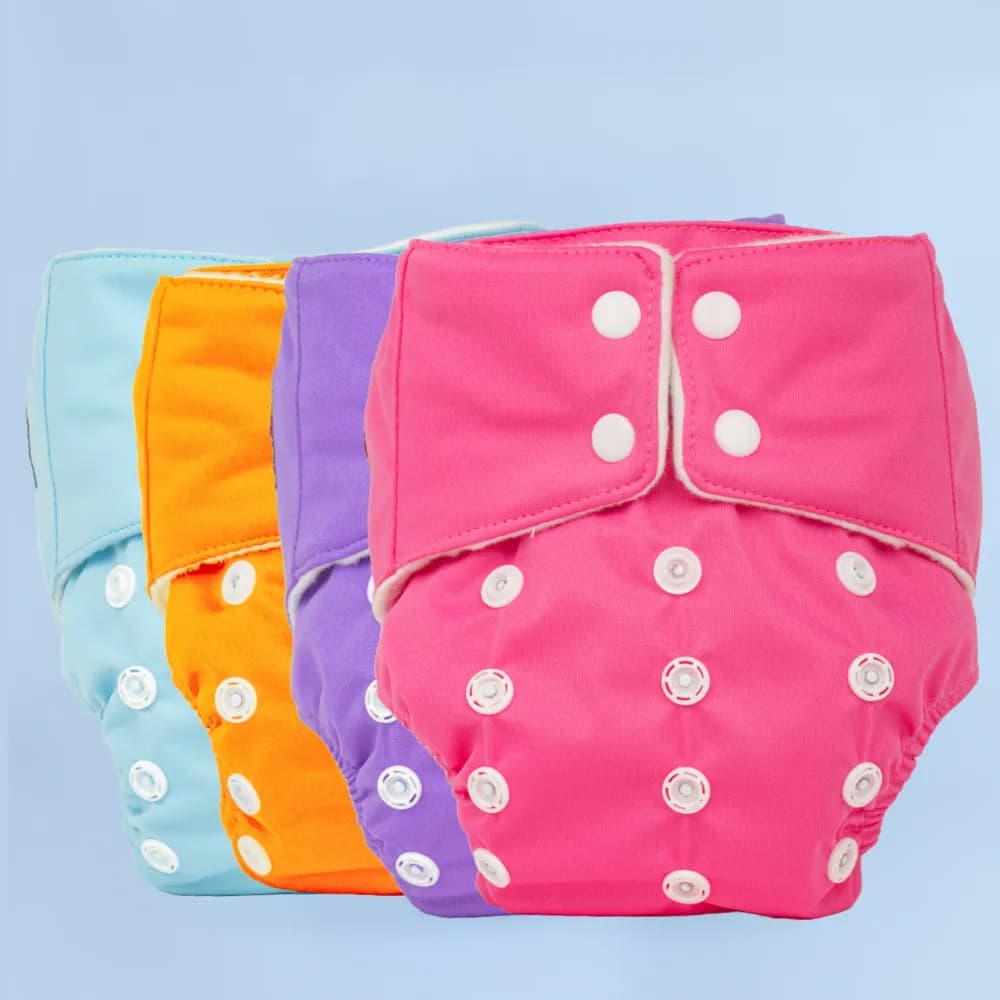
Adjustable & Reusable Cloth Diaper - Assorted Colors - Pack of 4
Oeko-Tex Certified | Prevents Rashes




Article Posted Under
Related Articles
Diet for a Breastfeeding Mother: Protein, Milk Supply, and What Indian Moms Actually Need
17 min ഗർഭകാലത്ത് നിങ്ങൾക്ക് എത്ര പ്രോട്ടീൻ ആവശ്യമാണ്?|(How Much Protein Do You Need During Pregnancy In Malayalam)
 8 min
8 min ಗರ್ಭಾವಸ್ಥೆಯಲ್ಲಿ ನಿಮಗೆ ಎಷ್ಟು ಪ್ರೋಟೀನ್ ಬೇಕು?|(How Much Protein Do You Need During Pregnancy In Kannada)
 8 min
8 min গর্ভাবস্থায় আপনার কতটা প্রোটিন দরকার?|(How Much Protein Do You Need During Pregnancy In Bangla)
 12 min
Related Topics
.webp&w=32&q=75)
Medical Disclaimer
This content is for informational purposes only and should not replace professional medical advice. Consult with a physician or other health care professional if you have any concerns or questions about your health. If you rely on the information provided here, you do so solely at your own risk.


AWARDS AND RECOGNITION

Mylo wins Forbes D2C Disruptor award

Mylo wins The Economic Times Promising Brands 2022
AS SEEN IN












- Mylo Care: Effective and science-backed personal care and wellness solutions for a joyful you.
- Mylo Baby: Science-backed, gentle and effective personal care & hygiene range for your little one.
- Mylo Community: Trusted and empathetic community of 10mn+ parents and experts.


Product Categories
Baby Carrier | Baby Soap | Baby Wipes | Stretch Marks Cream | Baby Cream | Baby Shampoo | Baby Massage Oil | Baby Hair Oil | Stretch Marks Oil | Baby Body Wash | Baby Powder | Baby Lotion | Diaper Rash Cream | Newborn Diapers | Teether | Baby Kajal | Baby Diapers Pants | Cloth Diapers | Laundry Detergent | Lactation Granules |