


Orders
.png&w=48&q=75 "login")
Profile


Wallet

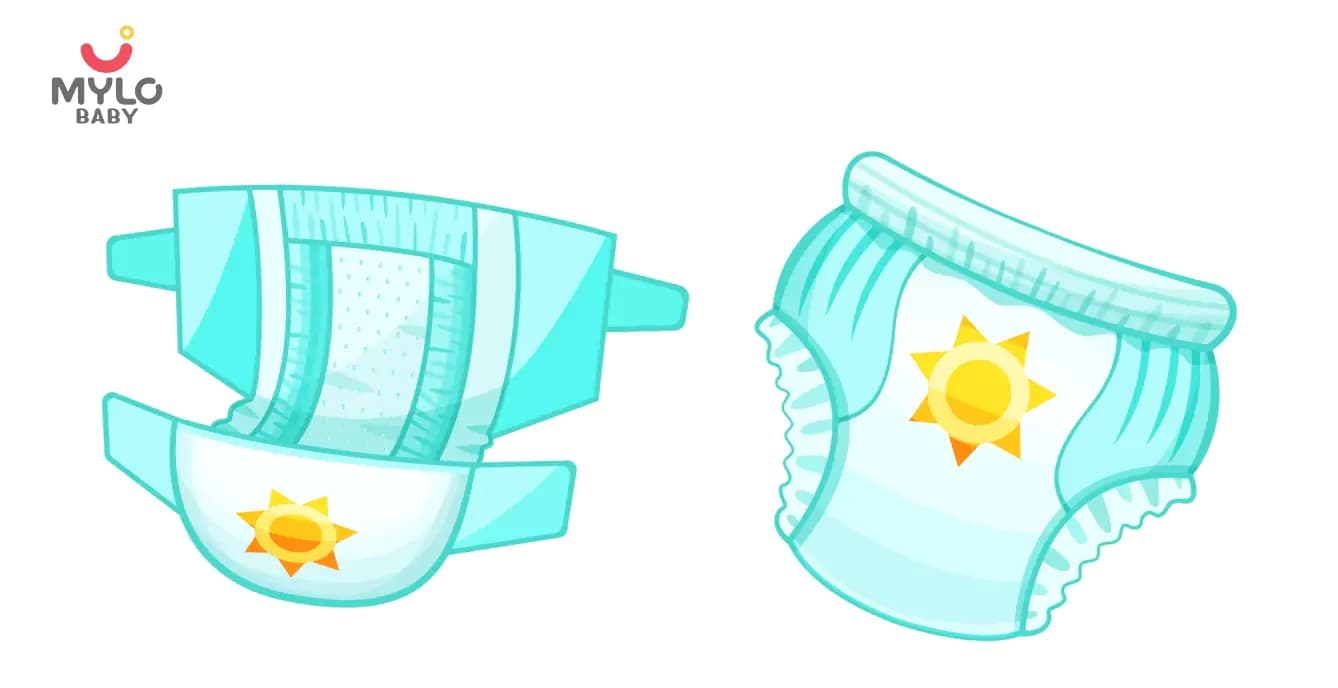
Taped Diapers vs Diaper Pants – Which is Best for Your Baby?
 13 min
AI-Generated Summary
Quick overview in 30 seconds.webp&w=32&q=75)
Summary
- Diaper pants are easy to pull on, ideal for active babies, great for potty training, less bulky and convenient for travel.
- Taped diapers offer a wide range of sizes, higher absorbency, adjustable fit and are gentle for babies with sensitive skin.
- Choosing between taped diapers vs diaper pants depends on your baby's age, mobility, absorbency needs, skin sensitivity and potty training stage.
- Looking for the right diaper for your baby? Explore our Adjustable & Reusable Cloth Diaper - Red & Blue - Pack of 2.
TL;DR
Both taped diapers and diaper pants work well; the better choice depends on your baby's age and mobility, not on one style being superior. Taped diapers are usually the practical pick for newborns and less mobile babies, because they are easy to fasten while your baby lies down, come in newborn sizes, and can be folded below the umbilical cord stump, which is what doctors advise while it heals (AAP). Diaper pants suit crawling, standing and running toddlers, and are handy during potty training. Importantly, absorbency depends on the brand, size and absorbent core, NOT on whether it is taped or pull-on. And diaper rash is caused mainly by prolonged contact with wet or soiled skin, so frequent changing matters far more than the diaper style (Mayo Clinic).
Quick Answer
Taped diapers fasten with adjustable tapes and are best for newborns and babies who are not yet mobile, since you can change them lying down, get a custom fit, and fold the diaper below the healing umbilical cord stump. Diaper pants pull on like underwear and are best for active, wriggly babies and toddlers, and are useful during potty training. Neither style is automatically more absorbent or gentler on skin; that depends on the product you buy and, above all, on how often you change it. Newborns typically need 8 to 12 changes a day, and any soiled diaper should be changed right away.
Author: Mylo Editorial Team, Mylo Parenting Desk Medically reviewed by: Mylo Editorial Board, aligned with AAP and IAP (Indian Academy of Pediatrics) guidance Last updated: 14 July 2026
Medical Disclaimer: This article is for informational purposes only and is not a substitute for professional medical advice. If your baby has a diaper rash that is severe, blistering, bleeding, spreading, or not improving within a few days, or comes with fever, please consult your paediatrician.
Key Takeaways
- Neither style is "better"; the right choice depends on your baby's age, size and mobility
- Taped diapers suit newborns and less mobile babies, and allow an adjustable fit
- For newborns, the diaper should be folded below the umbilical cord stump while it heals (AAP)
- Diaper pants suit active, crawling and standing babies and toddlers
- Absorbency depends on the brand, size and absorbent core, NOT on taped vs pants
- Diaper rash is caused mainly by prolonged wet or soiled contact, not by diaper style (Mayo Clinic)
- Change frequently: newborns often need 8 to 12 changes a day, and soiled diapers immediately (AAD)
- Pants can help with potty training, but readiness (usually 18 to 30 months) matters more (AAP)
Taped Diapers vs Diaper Pants: Quick Comparison
| Feature | Taped Diapers | Diaper Pants |
|---|---|---|
| Best suited for | Newborns and less mobile babies | Active babies and toddlers on the move |
| How to wear | Wrap around and fasten with tapes | Pull on like underwear |
| How to remove | Unfasten the tapes | Pull down, or tear the sides |
| Changing position | Easy while baby lies down | Easier while baby stands |
| Fit | Adjustable at the waist with tapes | Fixed, stretchy elastic waistband |
| Checking for soiling | Can peek by unfastening a tape | Usually needs removing or a wetness indicator |
| Size range | Includes newborn sizes | Usually starts from larger sizes |
| Absorbency | Depends on the product, not the style | Depends on the product, not the style |
| Potty training | Less practical | Helpful, mimics underwear |
| Travel | Slightly bulkier | Compact and quick to change |
Pros of Diaper Pants
- Easy to put on and take off: They pull up like underwear and have tear-away sides, which helps with messy changes.
- Great for active babies: The stretchy elastic waistband keeps them in place during crawling, standing and play.
- Handy during potty training: The underwear-like design lets a toddler pull them up and down, supporting independence.
- Less bulky: Often slimmer, so clothes fit more easily.
- Convenient for travel: Compact, and you can change your baby standing up, which is useful when there is no changing table.
Cons of Diaper Pants
- Limited size range: They usually start from bigger sizes, so they are generally not suitable for newborns.
- Harder to check for soiling: You often have to remove them, or rely on the wetness indicator.
- Fit is not adjustable: If the size is not right, you cannot tighten it like tapes, which can mean leaks.
- Not ideal in the newborn stage: You cannot fold them below a healing umbilical cord stump.
- Sometimes pricier: Depending on the brand, pants can cost a little more per piece.
Pros of Taped Diapers
- Wide size range, including newborn: Easier to get a good fit right from birth.
- Adjustable fit: The tapes let you customise the waist, which helps prevent leaks in small or slim babies.
- Easy to check and change lying down: Ideal when your baby cannot yet stand, and you can peek without a full change.
- Newborn-friendly with the cord stump: You can fold the front down so the diaper sits below the umbilical stump while it heals, as doctors advise (AAP) (Cleveland Clinic).
- Often more economical: In many ranges, taped diapers cost slightly less per piece.
Cons of Taped Diapers
- Slower to change: Fastening tapes takes longer, which is tricky with a wriggly baby.
- Bulkier: Can be harder to fit under snug clothes.
- Can loosen during active play: Tapes may shift or come undone once your baby is crawling and walking.
- Less useful for potty training: A toddler cannot pull them up and down independently.
- Less convenient standing up: Changing a standing toddler in a taped diaper is awkward.
What About Absorbency? Clearing Up a Common Myth
You will often read that diaper pants are "less absorbent" than taped diapers. That is not accurate. Absorbency is determined by the absorbent core, the size and the specific product you buy, not by whether it fastens with tapes or pulls on. Many pant-style diapers are made specifically for overnight use and are highly absorbent, while some basic taped diapers are not.
If you need long or overnight protection, choose a variant marketed for higher absorbency or overnight use, in the correct size for your baby's weight, in either style. A diaper that is too big or too small will leak regardless of the style.
Diapers and Skin: What Actually Prevents Rash
Another common claim is that one style is "better for sensitive skin." In reality, diaper rash is caused mainly by prolonged contact with a wet or soiled diaper, along with friction and irritation from stool (Mayo Clinic) (NHS). The diaper style matters far less than these:
- Change often. Newborns typically need 8 to 12 diaper changes in 24 hours, roughly every 2 to 3 hours while awake
- Change a soiled diaper immediately. Stool irritates skin quickly, so it should never wait (AAD)
- Clean gently and pat dry, do not rub
- Give some nappy-free air time when practical
- Use a barrier cream (zinc oxide or petroleum jelly) if your baby is prone to rash
- Make sure the fit is right, since a too-tight diaper of either style causes friction and marks
If a rash is severe, blistering, bleeding, spreading or not improving in a few days, or comes with fever, see your paediatrician.
Diapers and Potty Training
Diaper pants can genuinely help during potty training because a toddler can pull them up and down like underwear, which supports independence. But the diaper style is not what makes potty training work: readiness is.
Most experts suggest introducing the idea around 18 months and starting actual training when your child shows readiness signs, commonly between about 21 and 30 months (AAP) (AAFP). Readiness signs include:
- Staying dry for longer stretches
- Being able to walk to the potty and pull clothes up and down
- Understanding and following simple instructions
- Telling you (in words or gestures) that they need to go, or dislike a soiled diaper
- Showing interest in the toilet
Switching to pants before your child shows these signs will not speed things up.
How to Choose the Right One for Your Baby
| Consider | Choose Taped Diapers If | Choose Diaper Pants If |
|---|---|---|
| Age and mobility | Newborn or not yet crawling | Crawling, standing, walking, very wriggly |
| Umbilical cord stump | Still healing (fold below it) | Stump has healed |
| Fit needs | Baby is slim, or between sizes and needs adjusting | Standard fit works well |
| Potty training | Not started | Starting or in progress |
| Changing situation | Baby changes lying down | Baby resists lying down, or you change on the go |
| Overnight | Pick a high-absorbency variant | Pick a high-absorbency/overnight variant |
Many families simply use both: taped diapers in the early months and at home, and pants once the baby is mobile and while travelling.
Indian Context
In India, diapering choices are shaped by climate and cost. In hot, humid weather, changing frequently and giving nappy-free time matters even more, since trapped heat and moisture worsen rash. Many Indian families use cloth langots or nappies at home and reserve disposables for outings and nights, which is perfectly fine as long as cloth is changed as soon as it is wet. Buy by your baby's weight, not age, as Indian sizing varies by brand, and do not stock up too far ahead since babies outgrow sizes quickly. If cost is a concern, taped diapers are often slightly cheaper per piece, and using them at home while saving pants for travel is a practical middle path.
Myths vs Facts
| Myth | Fact |
|---|---|
| Diaper pants are always less absorbent | Absorbency depends on the product, size and core, not the style |
| Taped diapers are better for sensitive skin | Rash comes mainly from prolonged wetness and stool contact, not the style |
| Switching to pants makes potty training happen faster | Readiness (usually 18 to 30 months) drives potty training, not the diaper |
| One style suits a baby for the whole diapering period | Most babies move from taped (newborn) to pants (mobile toddler) |
| A bigger size means fewer leaks | The wrong size leaks; fit to your baby's weight |
Frequently Asked Questions
Newborn baby ke liye taped diaper better hai ya pants? (Hinglish)
Newborn ke liye aam taur par taped diaper behtar hote hain. Inme newborn size milti hai, lete hue aasani se badal sakte hain, fit tape se adjust hoti hai, aur sabse zaroori, inhe umbilical cord (naabhi) ke neeche fold kiya ja sakta hai jab tak wo sookh na jaye. Pants aksar badi sizes se shuru hote hain, isliye wo baad mein, jab bacha active ho jaye, behtar rehte hain.
Diaper pants mein absorbency kam hoti hai kya? (Hinglish)
Nahin, yeh ek aam galatfehmi hai. Absorbency diaper ke absorbent core, size aur brand par depend karti hai, na ki taped ya pants hone par. Raat ke liye ya lambe samay ke liye, dono style mein "overnight" ya high-absorbency wale variant milte hain, bas sahi size (bacche ke weight ke hisaab se) chunein.
Which is better for overnight, taped diapers or pants?
Either can work well overnight. What matters is choosing a variant made for high absorbency or overnight use, in the correct size for your baby's weight. The fastening style itself does not determine how long it lasts.
At what age should I switch from taped diapers to pants?
There is no fixed age. Most parents switch once the baby starts crawling, standing or resisting lying down for changes, often somewhere around 6 to 12 months, since pants are easier to put on a moving baby.
Do diaper pants cause more rash?
No. Rash risk comes mainly from how long the skin stays in contact with wet or soiled diaper, plus friction and fit, rather than the style. Change frequently, ensure the size is right, and use a barrier cream if your baby is prone to rash (Mayo Clinic).
How often should I change my baby's diaper?
Newborns often need 8 to 12 changes a day, roughly every 2 to 3 hours while awake, and any soiled (poopy) diaper should be changed straight away, as stool irritates skin quickly (AAD).
References
- American Academy of Pediatrics (HealthyChildren.org). Umbilical Cord Care in Newborns. www.healthychildren.org
- Mayo Clinic. Diaper rash: Symptoms and causes. www.mayoclinic.org
- American Academy of Dermatology (AAD). How to treat diaper rash. www.aad.org
- NHS. Nappy rash. www.nhs.uk
- American Academy of Pediatrics (Pediatrics). Toilet Training Guidelines: The Role of the Parents in Toilet Training. publications.aap.org
- American Academy of Family Physicians (AAFP). Toilet Training: Common Questions and Answers. www.aafp.org
- Cleveland Clinic. Umbilical Cord: Care and Appearance. my.clevelandclinic.org
Related Articles
Baby Names Starting With N for Boys & Girls: Meanings, Religion, Rashi & Nakshatra
 9 min
9 min Baby Names Starting With M for Boys & Girls: Meanings, Religion, Rashi & Nakshatra
 10 min
 Baby Names Starting With L for Boys & Girls: Meanings, Religion, Rashi & Nakshatra
 9 min
9 min Baby Names Starting With K for Boys & Girls: Meanings, Religion, Rashi & Nakshatra
 9 min
9 min
Related Topics
.webp&w=32&q=75)
Medical Disclaimer
This content is for informational purposes only and should not replace professional medical advice. Consult with a physician or other health care professional if you have any concerns or questions about your health. If you rely on the information provided here, you do so solely at your own risk.


AWARDS AND RECOGNITION

Mylo wins Forbes D2C Disruptor award

Mylo wins The Economic Times Promising Brands 2022
AS SEEN IN













- Mylo Care: Effective and science-backed personal care and wellness solutions for a joyful you.
- Mylo Baby: Science-backed, gentle and effective personal care & hygiene range for your little one.
- Mylo Community: Trusted and empathetic community of 10mn+ parents and experts.


Product Categories
Baby Carrier | Baby Soap | Baby Wipes | Stretch Marks Cream | Baby Cream | Baby Shampoo | Baby Massage Oil | Baby Hair Oil | Stretch Marks Oil | Baby Body Wash | Baby Powder | Baby Lotion | Diaper Rash Cream | Newborn Diapers | Teether | Baby Kajal | Baby Diapers Pants | Cloth Diapers | Laundry Detergent | Lactation Granules |