


Orders
.png&w=48&q=75 "login")
Profile


Wallet

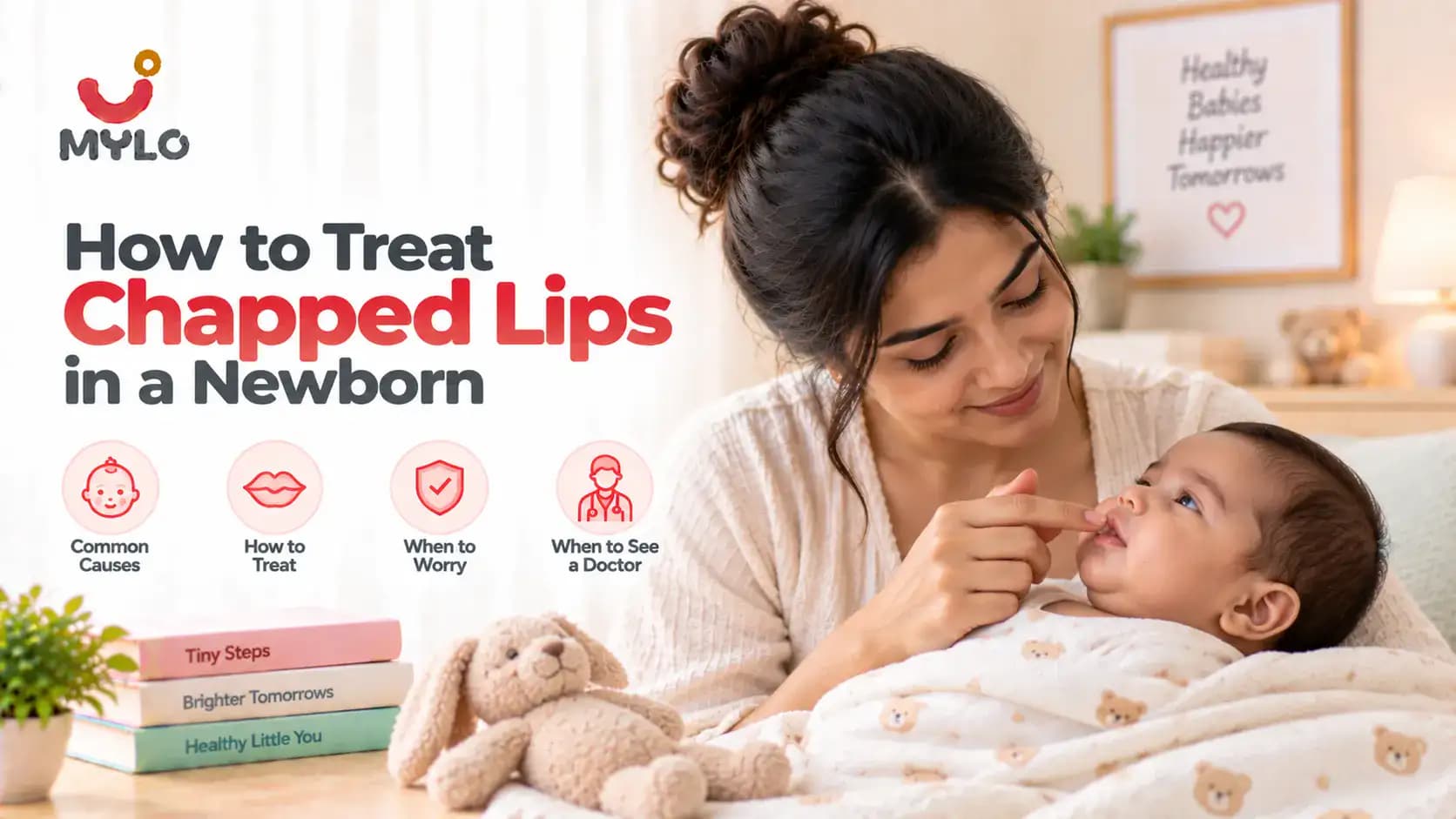
How to Treat Chapped Lips in a Newborn
 10 min
Quick answer
Dry or chapped lips in a newborn are very common and usually harmless. A baby's lips have no oil glands, so they lose moisture easily, and the outer skin often peels a little in the first weeks. Most cases settle with gentle care. You can dab on a little breast milk, purified lanolin (the same cream used for sore nipples), or plain petroleum jelly. Never use honey on a baby under one year, never give water to a baby under six months, and see a doctor if your baby has a fever, seems unwell, has fewer wet nappies, or the lips crack, bleed or blister.
Key takeaways
Chapped lips in newborns are common and usually not serious. A baby's lips lack oil glands and lose moisture easily.
Gentle care is enough. Breast milk, purified lanolin or plain petroleum jelly are safe to apply.
Never put honey on a baby's lips under 12 months. It carries a risk of infant botulism, a serious illness.
Do not give water to a baby under 6 months to "hydrate" them. Breast milk or formula is all they need, and water can be harmful.
Watch for dehydration: fewer wet nappies, a sunken soft spot, no tears, or a sleepy, poorly feeding baby need urgent care.
See a doctor if your baby has a fever with chapped lips, blisters or sores near the mouth, or lips that crack, bleed or do not improve.
Is it normal for a newborn to have dry, chapped lips?
Yes, in most cases it is completely normal. Unlike the rest of the skin, our lips have no oil (sebaceous) glands, so they have no natural barrier to hold in moisture and dry out easily. Newborns are especially prone to this because their skin is still adjusting to life outside the womb, and a little peeling or flaking of the lips in the first few weeks is usually part of that normal process.
So while dry lips can look worrying on such a tiny baby, they are rarely a sign of anything serious. The main things to do are keep your baby well fed, offer gentle care, and know the few warning signs that mean you should check with a doctor.
What causes chapped lips in newborns?
Cause | Why it happens |
|---|---|
No oil glands on the lips | Lips cannot hold moisture the way skin does, so they dry easily |
Newborn skin adjusting | Peeling and dryness are common in the first weeks after birth |
Weather | Cold, heat, wind, dry air or air conditioning all draw moisture from the lips |
Mouth breathing | A blocked nose makes air pass constantly over the lips, drying them |
Frequent sucking and licking | Latching, sucking and saliva can chap the lips |
Dehydration | Less common, but not feeding enough can dry the lips (see below) |
Irritation or allergy | Reactions to scented products, balms or fabrics can dry the lips |
Most of these are minor and easily managed. Dehydration is the one cause that needs closer attention.
Safe remedies: what you can put on your baby's lips
A small amount of a gentle, baby-safe moisturiser, applied with clean hands, is usually all that is needed.
Safe to use | Notes |
|---|---|
Breast milk | Dab a few drops on the lips. Gentle, free, and naturally soothing. |
Purified lanolin | The same cream mothers use for sore nipples, so it is safe if your baby licks it. |
Plain petroleum jelly | A thin layer seals in moisture. Fragrance-free and effective. |
Coconut oil (pure, unscented) | A light natural option many parents find helpful. |
Baby-safe lip balm | Choose a fragrance-free product made specifically for babies, for prevention. |
Apply a small amount a few times a day, especially before going out in cold or dry weather, and after feeds if the lips look dry.
What to never use on a newborn's lips
Some common suggestions are unsafe for babies. Please avoid these:
Honey. Never apply honey to the lips of a baby under 12 months. It can carry spores that cause infant botulism, a rare but serious illness. This is a firm rule.
Giving water to "hydrate" a young baby. Do not give water to a baby under six months. Breast milk or formula provides all the fluid they need, and extra water can dangerously dilute the salts in a small baby's body.
Adult or medicated lip balms. Avoid products with fragrance, menthol, camphor, salicylic acid or flavourings, which can irritate or be unsafe if licked.
Peeling or picking the flaky skin. Let it come away on its own to avoid soreness and infection.
When in doubt, stick to breast milk, purified lanolin or plain petroleum jelly.
Could my baby be dehydrated?
Usually chapped lips alone do not mean dehydration, but it is worth knowing the signs, because dehydration in a newborn is a medical concern. Watch for:
Fewer wet nappies (fewer than about 6 a day in a young baby).
A sunken soft spot (fontanelle) on the top of the head.
No tears when crying, and a dry mouth.
A sleepy, floppy or hard-to-wake baby, or one feeding poorly.
Dark, strong-smelling urine.
If you see these signs, do not give water. Instead, feed your baby more often (breast milk or formula) and contact your doctor promptly, as a young baby can become unwell quickly.
How to prevent chapped lips
Feed regularly to keep your baby well hydrated with breast milk or formula.
Protect from harsh weather. Cover the pram in cold or windy conditions, and avoid direct blowing air conditioning or heaters.
Keep the air comfortable. A humidifier can help in very dry or heated rooms.
Apply a gentle balm before going out and at bedtime.
Wipe away drool and milk gently, and pat, do not rub, the lips dry.
When should you see a doctor?
Most chapped lips clear with home care, but see a doctor promptly if your baby has:
A fever along with chapped or cracked lips. Persistent fever with red, cracked lips can be a sign of Kawasaki disease and needs urgent assessment.
Blisters, sores or ulcers on or around the lips or mouth. In a newborn, these can signal infection, including herpes (HSV), which is a medical emergency in young babies.
Signs of dehydration (fewer wet nappies, sunken soft spot, no tears, sleepiness, poor feeding).
Lips that crack, bleed, or do not improve after a week or two of gentle care.
Swelling, rash or signs of an allergic reaction.
A baby who seems generally unwell in any way.
Trust your instincts. If something feels wrong, it is always right to get your baby checked.
Mylo Parents Asked
Is it normal for my newborn to have dry, peeling lips?
Yes. Because lips have no oil glands and newborn skin is still adjusting, mild dryness and peeling in the first weeks is common and usually harmless. Gentle care is all that is needed for most babies.
What is the safest thing to put on my baby's chapped lips?
Breast milk, purified lanolin (the cream used for sore nipples) or a thin layer of plain petroleum jelly are all safe. Avoid honey, fragranced balms and adult lip products.
Can I use honey or ghee on my baby's lips?
Never use honey on a baby under one year, as it risks infant botulism. A tiny amount of ghee is generally considered safe, but purified lanolin, breast milk or petroleum jelly are simpler, reliable choices.
Should I give my newborn water for dry lips?
No. Babies under six months should not be given water. Feed more breast milk or formula instead, and see a doctor if you are worried about dehydration.
Can chapped lips affect breastfeeding?
Very dry or sore lips can occasionally make a baby less comfortable feeding, so keeping the lips soft with a safe balm helps. If your baby is struggling to latch or feed, speak to your doctor or a lactation consultant.
When are chapped lips a sign of something serious?
Chapped lips with a fever (possible Kawasaki disease), blisters or sores near the mouth (possible infection), or signs of dehydration all need prompt medical attention. On their own, chapped lips are usually harmless.
The bottom line
Chapped lips in a newborn are common, usually harmless, and easy to soothe. A baby's lips have no oil glands, so they dry out quickly, and a little peeling in the early weeks is normal. Keep your baby well fed, protect them from harsh weather, and apply a safe moisturiser like breast milk, purified lanolin or plain petroleum jelly. Steer clear of honey, adult lip products, and giving water to a young baby. Above all, watch for the warning signs, a fever, blisters near the mouth, or signs of dehydration, and see your doctor if any appear. With gentle care, your baby's lips will almost always be soft again very soon.
References
American Academy of Pediatrics (HealthyChildren.org). Infant botulism and why honey is unsafe under 12 months.
HealthyChildren.org (AAP). Water safety for babies under 6 months.
Healthline. Newborn chapped lips: causes and care.
American Academy of Pediatrics. Kawasaki disease: signs and symptoms.
Related reads on Mylo
This article is for information only and does not replace advice from your paediatrician.
Article Posted Under
Related Articles
What Are the Developmental Red Flags From 1 to 3 Years? An Age-by-Age Checklist for Parents (2026)
17 min Punjabi Baby Boy Names: The Complete Guide With Meanings (ਪੰਜਾਬੀ ਮੁੰਡਿਆਂ ਦੇ ਨਾਮ)
 8 min
8 min Malayalam Baby Names: The Complete Guide With Meanings (മലയാളം കുഞ്ഞുങ്ങളുടെ പേരുകൾ)
 10 min
 Marathi Baby Names: The Complete Guide With Meanings (मराठी बाळांची नावे)
 9 min
9 min
Related Topics
.webp&w=32&q=75)
Medical Disclaimer
This content is for informational purposes only and should not replace professional medical advice. Consult with a physician or other health care professional if you have any concerns or questions about your health. If you rely on the information provided here, you do so solely at your own risk.


AWARDS AND RECOGNITION

Mylo wins Forbes D2C Disruptor award

Mylo wins The Economic Times Promising Brands 2022
AS SEEN IN












- Mylo Care: Effective and science-backed personal care and wellness solutions for a joyful you.
- Mylo Baby: Science-backed, gentle and effective personal care & hygiene range for your little one.
- Mylo Community: Trusted and empathetic community of 10mn+ parents and experts.


Product Categories
Baby Carrier | Baby Soap | Baby Wipes | Stretch Marks Cream | Baby Cream | Baby Shampoo | Baby Massage Oil | Baby Hair Oil | Stretch Marks Oil | Baby Body Wash | Baby Powder | Baby Lotion | Diaper Rash Cream | Newborn Diapers | Teether | Baby Kajal | Baby Diapers Pants | Cloth Diapers | Laundry Detergent | Lactation Granules |