


Orders
.png&w=48&q=75 "login")
Profile


Wallet

Breathing Techniques During Labor: How to Ease Pain & Stay Calm
 7 Likes|
 10 min
AI-Generated Summary
Quick overview in 30 seconds.webp&w=32&q=75)
Summary
- Breathing techniques during labor help manage contractions, reduce pain, ease anxiety, and keep you focused throughout each stage of childbirth and delivery.
- Effective methods include relax breathing, counted breathing, Lamaze breathing, and mouth breathing—practice them early in pregnancy to master the rhythm before D-day.
- Your birth partner can support you by co-breathing, holding hands, maintaining eye contact, and helping you sustain a steady rhythm during painful contractions.
- What essentials should you keep ready for delivery day? Explore our Adjustable & Reusable Cloth Diaper - Red & Blue - Pack of 2.

 4.7
4.7TL;DR
Patterned, rhythmic breathing is one of the simplest and most effective natural ways to cope with labor, helping to ease pain, reduce fear and keep you calm and focused through each contraction (NCBI RCT). Easy techniques include "relax" breathing, counted breathing, Lamaze rhythmic breathing, and nose-in, mouth-out breathing. The key is to keep a steady rhythm, not let your breath speed up into panic-breathing, and switch techniques if one stops working. Practise them through pregnancy so they feel natural by your due date, and involve your birth partner, co-breathing really helps. While pushing, avoid holding your breath for long stretches, and keep breathing rhythmically between contractions to keep oxygen flowing to you and your baby.
Quick Answer
Breathing techniques help you manage labor pain and anxiety by keeping you calm, focused and in rhythm through contractions. Useful methods include "relax" breathing (think "re" in, "lax" out), counted breathing (in for 4 to 5, out for 4 to 5), Lamaze rhythmic breathing, and breathing in through the nose and out softly through the mouth. Keep the out-breath at least as long as the in-breath, and do not let breathing become fast and panicky. Practise during pregnancy, breathe along with your partner for support, and avoid long breath-holding while pushing. Your care team will guide you on when and how to push.
Author: Mylo Editorial Team, Mylo Parenting Desk Medically reviewed by: Mylo Editorial Board, aligned with Lamaze and FOGSI guidance Last updated: 9 July 2026
Medical Disclaimer: This article is for informational purposes only and is not a substitute for professional medical advice or your birth plan. Every labor is different. Follow the guidance of your doctor or midwife on pain relief, pushing and your delivery, and tell your care team if you feel breathless, dizzy or unwell.
Key Takeaways
- Rhythmic, patterned breathing helps ease labor pain, fear and tension (NCBI RCT)
- Keep the out-breath as long as the in-breath, and avoid fast panic-breathing
- Easy methods: "relax" breathing, counted breathing, Lamaze, nose-in mouth-out
- Do not feel locked into one technique, switch if it stops helping
- Practise through pregnancy so it feels natural by your due date
- A birth partner co-breathing with you is a big source of support
- While pushing, avoid long breath-holding; keep oxygen flowing to you and baby
- Your doctor or midwife guides when and how to push, including with an epidural
How Do Breathing Techniques Help During Labor?
The more you learn about labor, the more you will hear about different breathing patterns for different stages. Focused, patterned breathing helps you make each contraction productive, and helps you cope with discomfort, pain, fear and anxiety by keeping you calm and centred (NCBI RCT).
The trick is to learn and practise these techniques early in pregnancy. By the time labor arrives, breathing in these patterns will feel almost automatic, so you can rely on it when you need it most.
You may also like: How to maintain your mental health during pregnancy
Simple Breathing Techniques for Labor
Aim for slow, rhythmic breathing. Do not let the in-breath become longer than the out-breath. During very strong contractions your breathing may become shallower, which is fine as long as it stays rhythmic and does not speed up into panic-breathing. Many hospitals have childbirth educators, and your doctor or midwife can guide you too.
| Technique | How to Do It |
|---|---|
| Relax breathing | Think "re" as you breathe in, "lax" as you breathe out, releasing tension with each exhale |
| Counted breathing | Breathe in slowly counting to 4 or 5, then breathe out counting to 4 or 5 |
| Lamaze breathing | Rhythmic breathing that builds focus and relaxation, drawing attention away from the pain (classes available) |
| Nose-in, mouth-out | Breathe in through the nose, out softly through a relaxed mouth; some women find a soft "ooohh" or "aaahh" soothing |
Use slow breathing in early labor as contractions become regular, then move to other patterns as labor advances. Do not feel bound to one technique, being aware of several means you can switch whenever one stops working or you simply feel like a change.
You may also like: 7 labor signals that your baby may arrive soon
How Your Birth Partner Can Help
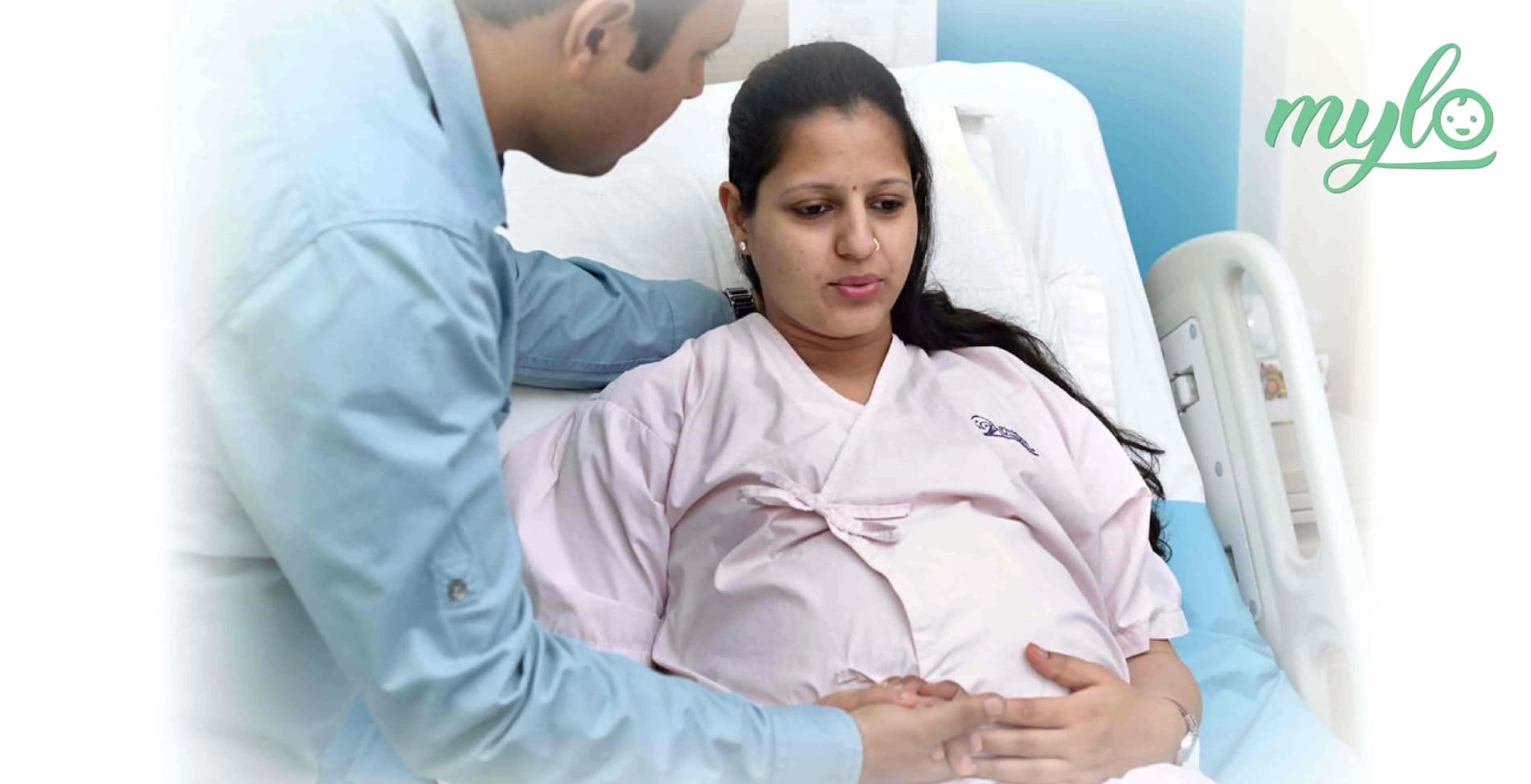
It is hard to keep a steady rhythm during painful contractions, especially when you are tired and overwhelmed. This is where a birth partner, often your husband, can really help:
- Breathing along with you to keep your rhythm steady
- Making calm eye contact, which is grounding and relaxing
- Holding your hands to help you settle and stay in rhythm
- Giving you a breathing pattern to simply follow when you cannot lead
Practise with your partner during pregnancy. It may feel awkward at first, but you will both get used to it, and co-breathing is often a lifeline in the moments when you feel like giving up.
Breathing While Pushing
In the advanced stage of labor, you will push your baby out. Push as many times during each contraction as feels right to you, taking breaths in between. Keep your breathing rhythmic between contractions, as this maximises the oxygen available to you and your baby.
Avoid holding your breath and bearing down hard for a long time (prolonged breath-holding), as it can strain the pelvic area and reduce oxygen supply to your baby. Following your body's urges and your midwife's guidance, with steady breathing, is safer and often just as effective.
Does Breathing Help With an Epidural Too?
Yes. Even with an epidural, calm rhythmic breathing helps you stay relaxed and composed. With an epidural you may feel less urge to push, and that is completely normal. Your care team will guide you on when to start pushing, some may suggest waiting a little while after you are fully dilated ("laboring down"), while others may have you push once you are ready. Follow your doctor's or midwife's advice, and stay calm if you do not feel like pushing straight away, they are there to guide you.
You may also like: Epidural: advantages, disadvantages and risks
Getting Ready for the Big Day
Practising your breathing is one part of preparing for delivery. It also helps to have your hospital bag packed and ready in advance so you are not scrambling when labor starts. The Mylo Hospital Bag Essentials Kit is designed to bundle many of the things you and your baby will need for the big day, making one part of the preparation easier. It is a convenience product to help you get organised, and you can, of course, pack your own essentials too.
Indian Context
In India, labor is often approached with a lot of fear and very little preparation, and breathing or childbirth-education classes are still uncommon in many places. Simple breathing practice at home, even a few minutes a day, can make a real difference to how in-control you feel. Involve your partner or a close family member as your birth companion where your hospital allows it. Combine breathing with other comfort measures your doctor approves, and remember that asking for pain relief, if you want it, is completely okay.
Myths vs Facts
| Myth | Fact |
|---|---|
| You must stick to one "correct" breathing pattern | Switching techniques as needed is encouraged; use what helps in the moment |
| Breathing techniques only matter without an epidural | Calm breathing helps with an epidural too, keeping you relaxed and focused |
| Holding your breath and pushing hard is best | Prolonged breath-holding can strain the pelvis and reduce baby's oxygen |
| It is too late to learn breathing near your due date | Even a little practice helps, though earlier practice makes it more natural |
Frequently Asked Questions
Labor (prasav) mein saans ki technique se sach mein dard kam hota hai kya? (Hinglish)
Haan, rhythmic aur patterned breathing labor ke dard, dar aur tension ko kam karne mein madad karti hai, kyunki isse aap calm aur focused rehti hain. Zaroori yeh hai ki saans mein rhythm bana rahe aur wo tez ya panic wali na ho. Pregnancy ke dauran practice karein taaki labor mein aasan lage.
Pushing ke waqt saans kaise lein? (Hinglish)
Har contraction mein jitni baar push karna sahi lage utni baar karein, aur beech mein saans lein. Lambe samay tak saans rok kar zor lagane se bachein, kyunki isse pelvic area par dabav aur baby ki oxygen kam ho sakti hai. Rhythmic saans banaye rakhein aur midwife ki guidance follow karein.
When should I start practising labor breathing?
Ideally early in pregnancy. The more you practise, the more natural these patterns feel, so that during labor you can rely on them without having to think hard.
Which breathing technique is best for labor?
There is no single "best" one. Learn a few (relax, counted, Lamaze, nose-in mouth-out) and use whichever helps in the moment. Being able to switch is more useful than mastering just one.
Can breathing techniques replace an epidural or pain relief?
They are a helpful coping tool and can reduce pain and anxiety, but they are not a guaranteed substitute for medical pain relief. You can use breathing alongside an epidural or other pain relief if you choose, and asking for pain relief is always okay.
References
- Yuksel H, Cayir Y, Kosan Z, Tastan K. (2017). Effectiveness of breathing exercises during the second stage of labor on labor pain and duration: a randomized controlled trial. Journal of Integrative Medicine / PubMed. pubmed.ncbi.nlm.nih.gov
- Kamalifard M, Shahnazi M, Sayyah Melli M, et al. (2012). The efficacy of massage therapy and breathing techniques on pain intensity and physiological responses to labor pain. Journal of Caring Sciences / NCBI. pmc.ncbi.nlm.nih.gov
- Lamaze International. Breathing techniques for labor. www.lamaze.org
Trusted by Mamas Preparing for Their Big Day
As you practice breathing and ready yourself for labor, having delivery essentials packed brings calm and confidence.



Related Articles




Related Topics
.webp&w=32&q=75)
Medical Disclaimer
This content is for informational purposes only and should not replace professional medical advice. Consult with a physician or other health care professional if you have any concerns or questions about your health. If you rely on the information provided here, you do so solely at your own risk.


AWARDS AND RECOGNITION

Mylo wins Forbes D2C Disruptor award

Mylo wins The Economic Times Promising Brands 2022
AS SEEN IN













- Mylo Care: Effective and science-backed personal care and wellness solutions for a joyful you.
- Mylo Baby: Science-backed, gentle and effective personal care & hygiene range for your little one.
- Mylo Community: Trusted and empathetic community of 10mn+ parents and experts.


Product Categories
Baby Carrier | Baby Soap | Baby Wipes | Stretch Marks Cream | Baby Cream | Baby Shampoo | Baby Massage Oil | Baby Hair Oil | Stretch Marks Oil | Baby Body Wash | Baby Powder | Baby Lotion | Diaper Rash Cream | Newborn Diapers | Teether | Baby Kajal | Baby Diapers Pants | Cloth Diapers | Laundry Detergent | Lactation Granules |