


Orders
.png&w=48&q=75 "login")
Profile


Wallet

Baby Diapers: The Ultimate Breakdown of Various Types
 9 min
9 minAI-Generated Summary
Quick overview in 30 seconds.webp&w=32&q=75)
Summary
- Baby diapers come in many varieties including cloth, disposable, biodegradable, pocket, all-in-one, hybrid, training pants, swim, prefold, and fitted diapers, each with unique benefits.
- Cloth diapers are reusable and eco-friendly, while disposable and biodegradable diapers offer convenience and absorbency, making them ideal for travel, nighttime, or busy lifestyles.
- When choosing diapers, consider your lifestyle, absorbency needs, fit, budget, environmental impact, and feedback from other parents to find the best fit for your baby.
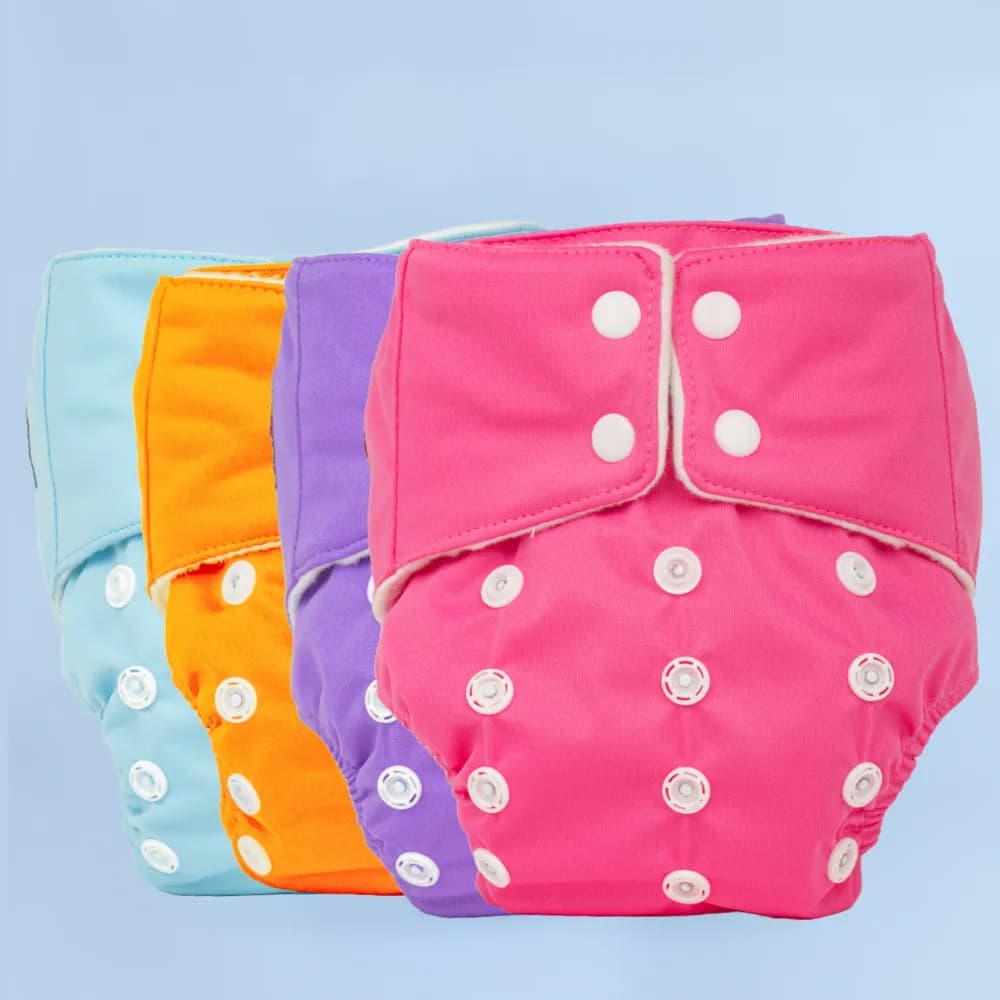
- Which diaper type suits your baby best? Explore our Adjustable & Reusable Cloth Diaper - Red & Blue - Pack of 2.
 4.8
4.8TL;DR
There are many types of diapers, broadly disposable, cloth (prefold, flat, fitted, pocket, all-in-one), hybrid, biodegradable, plus training pants and swim diapers. Each suits different needs: disposables for convenience and travel, cloth for savings and lower waste, all-in-ones for ease, swim diapers only for water. There is no single "best" type; the right choice depends on your budget, lifestyle and values (AAP). Whatever you choose, the fundamentals are the same: size by your baby's weight, get a snug fit, and change every 2 to 3 hours and immediately after a poop, because no diaper prevents rash on its own, frequent changing does (Mayo Clinic).
Quick Answer
The main types are disposable (convenient, super-absorbent), cloth in several styles (prefold, flat, fitted, pocket, all-in-one), hybrid (reusable cover + disposable or cloth inserts), biodegradable (plant-based disposables), training pants (for potty training) and swim diapers (for water, they contain solids but do not absorb urine). Pick based on your lifestyle, budget and environmental priorities. Many families use more than one type, for example disposables for travel and cloth at home. Size by weight, ensure a good fit, and change frequently to keep your baby comfortable and rash-free.
Author: Mylo Editorial Team, Mylo Parenting Desk Medically reviewed by: Mylo Editorial Board, aligned with AAP, NHS and IAP (Indian Academy of Pediatrics) guidance Last updated: 16 July 2026
Medical Disclaimer: This article is for informational purposes only and is not a substitute for professional medical advice. If your baby has a rash that is severe, blistering, bleeding, spreading or not improving in a few days, or comes with fever, please consult your paediatrician.
Key Takeaways
- Diaper types: disposable, cloth (several styles), hybrid, biodegradable, training pants, swim
- There is no single "best" type; it depends on budget, lifestyle and values (AAP)
- Disposables are convenient; cloth saves money and cuts waste but needs washing
- Swim diapers contain solids but do NOT absorb urine, they are only for water
- Biodegradable diapers are gentler on landfill but still need the right conditions to break down
- No diaper prevents rash on its own; frequent changing does (Mayo Clinic)
- Size by your baby's WEIGHT, not age, and check the fit
- Change every 2 to 3 hours and immediately after a poop (AAD)
Types of Diapers at a Glance
| Type | What It Is | Best For |
|---|---|---|
| Disposable | Single-use, super-absorbent, with tabs or pull-on | Convenience, travel, nights |
| Cloth (general) | Reusable, washable fabrics | Savings and lower waste |
| Prefold cloth | Rectangular multi-layer cloth, folded and fastened | Budget cloth diapering; needs a cover |
| Flat cloth | A single layer folded to fit | The most economical cloth option |
| Fitted cloth | Contoured with elastic legs and closures | Absorbent; good for nights (needs a cover) |
| Waterproof shell with a pocket for inserts | Adjustable absorbency | |
| All-in-one (AIO) | Cover and absorbent layers in one piece | Easiest cloth to use; daycare, outings |
| Hybrid | Reusable cover with cloth or disposable inserts | Flexibility between cloth and disposable |
| Biodegradable | Plant-based disposables | Convenience with a smaller footprint |
| Training pants | Underwear-like, pull-on, some absorbency | Potty training |
| Swim diapers | Contain solids, do not swell in water | Pool and beach only |
A Closer Look at Each Type
- Disposable diapers: convenient, highly absorbent, easy to use and discard, ideal for travel and nights. Choose fragrance-free, dye-free if your baby is sensitive.
- Cloth diapers: reusable, breathable, cost-effective over time and lower-waste, but they hold moisture closer to the skin, so change them sooner. They come in the styles below.
- Prefold and flat: the simplest, cheapest cloth options, folded and secured, used with a waterproof cover.
- Fitted: shaped to the baby with elastic legs, very absorbent, popular for nights, and needs a separate cover.
- Pocket: stuff your own insert, so you control absorbency (one insert for day, two for night).
- All-in-one: cover and absorbency sewn together, easiest to use, but slower to dry.
- Hybrid: a reusable cover with a choice of cloth or disposable inserts, flexible for home and travel.
- Biodegradable: plant-based disposables that break down faster than conventional ones, though in a normal landfill even these may not fully decompose without the right conditions.
- Training pants: pull-on, underwear-like, for the potty-training stage, remember, readiness (usually 18 to 30 months) drives potty training, not the pants (AAP).
- Swim diapers: designed to contain poop in water without swelling. Important: they do NOT absorb urine, so they are only for swimming, not everyday wear.
Read more: Cloth Diaper vs Disposable: Which is Best for Your Baby?
How to Choose the Right Diaper
- Consider your lifestyle: cloth suits families who value low waste and do not mind laundry; disposables and biodegradables suit those who prioritise convenience
- Check absorbency and fit: the diaper should fit snugly at the waist and thighs with the leg cuffs out, size by weight, not age. A bigger size does not prevent leaks (a too-big diaper gaps and leaks more)
- Weigh the budget: cloth is a higher up-front cost but cheaper over time; disposables cost less per pack but add up
- Think about the environment: cloth and biodegradable reduce landfill waste, but cloth uses water and energy to wash, so neither is perfectly "green"
- Trial and feedback: every baby is different, so try a couple of types, watch for leaks, red marks and comfort, and ask other parents
Read more: Do you need to change your baby's cloth diaper after every episode of pee?
Whatever You Choose: The Basics That Matter Most
No diaper type prevents rash on its own. These do the real work (AAD):
- Change every 2 to 3 hours, and immediately after a poop
- Clean front to back and pat the skin dry
- Give some nappy-free air time
- Use a zinc oxide barrier cream if your baby is prone to rash
- Avoid talcum powder, which is not recommended for babies
- For newborns, fold the diaper below the umbilical cord stump while it heals (AAP)
Read more: Browse baby diapers
Indian Context
In India's heat and humidity, breathability and frequent changing matter even more. Many families combine types, cloth langots or reusable diapers at home, disposables for travel and nights, which is a practical, economical approach. Buy by weight, since brands size differently. Swim diapers are worth having for pool visits, but not for daily use. Skip talcum powder in the diaper area, and if a rash keeps returning despite frequent changes, see your paediatrician, as it may be a fungal (candida) rash needing specific treatment (Cleveland Clinic).
Myths vs Facts
| Myth | Fact |
|---|---|
| One diaper type is best for everyone | The right choice depends on your budget, lifestyle and values |
| Swim diapers work for everyday use | They contain solids but do not absorb urine; use only for water |
| Biodegradable diapers fully break down in any bin | They need the right conditions; a normal landfill may not decompose them fully |
| A bigger size prevents leaks | A too-big diaper gaps at the legs and leaks more |
| The diaper type decides whether baby gets a rash | Frequent changing prevents rash, whatever the type |
Frequently Asked Questions
What are the main types of diapers?
Disposable, cloth (prefold, flat, fitted, pocket, all-in-one), hybrid, biodegradable, training pants and swim diapers. Each suits different needs and stages.
Which type of diaper is best for a newborn?
Taped disposables or fitted/prefold cloth work well for newborns, since you change them lying down and can fold below the cord stump. Choose by weight and change frequently.
Do I need swim diapers?
For pool or beach visits, yes, they contain poop in water without swelling. But they do not absorb urine, so they are only for swimming, not everyday wear.
Are biodegradable diapers really better for the environment?
They are gentler than conventional disposables and break down faster, but in a normal landfill they may not fully decompose without the right conditions. Cloth also helps, with its own water and energy trade-off.
How do I choose between cloth and disposable?
Consider convenience, cost, and environmental priorities. Many parents use both, cloth at home and disposables for travel and nights. Whatever you pick, fit and frequent changing matter most.
References
- American Academy of Pediatrics (HealthyChildren.org). Diapers: Disposable or Cloth? www.healthychildren.org
- American Academy of Pediatrics (HealthyChildren.org). Umbilical Cord Care in Newborns. www.healthychildren.org
- American Academy of Pediatrics (Pediatrics). Toilet Training Guidelines. publications.aap.org
- Mayo Clinic. Diaper rash: Symptoms and causes. www.mayoclinic.org
- American Academy of Dermatology (AAD). How to treat diaper rash. www.aad.org
- NHS. How to change your baby's nappy. www.nhs.uk
- Cleveland Clinic. Yeast Diaper Rash (Candidal Diaper Dermatitis). my.clevelandclinic.org
Trusted by Parents for Everyday Diapering Comfort
From cloth to disposable, find diapers that keep your little one dry, comfortable, and happy through every adventure.
Adjustable & Reusable Cloth Diaper - Assorted Colors - Pack of 4
Oeko-Tex Certified | Prevents Rashes



Article Posted Under
Related Articles
Diet for a Breastfeeding Mother: Protein, Milk Supply, and What Indian Moms Actually Need
17 min ഗർഭകാലത്ത് നിങ്ങൾക്ക് എത്ര പ്രോട്ടീൻ ആവശ്യമാണ്?|(How Much Protein Do You Need During Pregnancy In Malayalam)
 8 min
8 min ಗರ್ಭಾವಸ್ಥೆಯಲ್ಲಿ ನಿಮಗೆ ಎಷ್ಟು ಪ್ರೋಟೀನ್ ಬೇಕು?|(How Much Protein Do You Need During Pregnancy In Kannada)
 8 min
8 min গর্ভাবস্থায় আপনার কতটা প্রোটিন দরকার?|(How Much Protein Do You Need During Pregnancy In Bangla)
 12 min
Related Topics
.webp&w=32&q=75)
Medical Disclaimer
This content is for informational purposes only and should not replace professional medical advice. Consult with a physician or other health care professional if you have any concerns or questions about your health. If you rely on the information provided here, you do so solely at your own risk.


AWARDS AND RECOGNITION

Mylo wins Forbes D2C Disruptor award

Mylo wins The Economic Times Promising Brands 2022
AS SEEN IN












- Mylo Care: Effective and science-backed personal care and wellness solutions for a joyful you.
- Mylo Baby: Science-backed, gentle and effective personal care & hygiene range for your little one.
- Mylo Community: Trusted and empathetic community of 10mn+ parents and experts.


Product Categories
Baby Carrier | Baby Soap | Baby Wipes | Stretch Marks Cream | Baby Cream | Baby Shampoo | Baby Massage Oil | Baby Hair Oil | Stretch Marks Oil | Baby Body Wash | Baby Powder | Baby Lotion | Diaper Rash Cream | Newborn Diapers | Teether | Baby Kajal | Baby Diapers Pants | Cloth Diapers | Laundry Detergent | Lactation Granules |